

Research Focus and Mission
The built environment is a complex system shaped by physical, environmental, socio-cultural, and economic factors. Our research uses computational methods to help designers, engineers, policymakers, and stakeholders better understand and manage this complexity.
We develop digital tools and techniques that operate across scales, from building components to urban districts, supporting performance-based design and innovation in architecture and the built environment. Our work bridges informatics, architectural engineering, and spatial computation to improve building performance and urban systems.
A key focus is geospatial research, where we strengthen geo-information infrastructures to enable better spatial data acquisition, analysis, and management. We work with methods such as computational and parametric design, digital twins, spatial computing, optimisation, AI, virtual reality, GIS, point-cloud modelling, and database systems.
Ongoing Research Projects

MULTICARE
Lead: Prof. Mauro Overend, Dr. Simona Bianchi
2024 - 2028
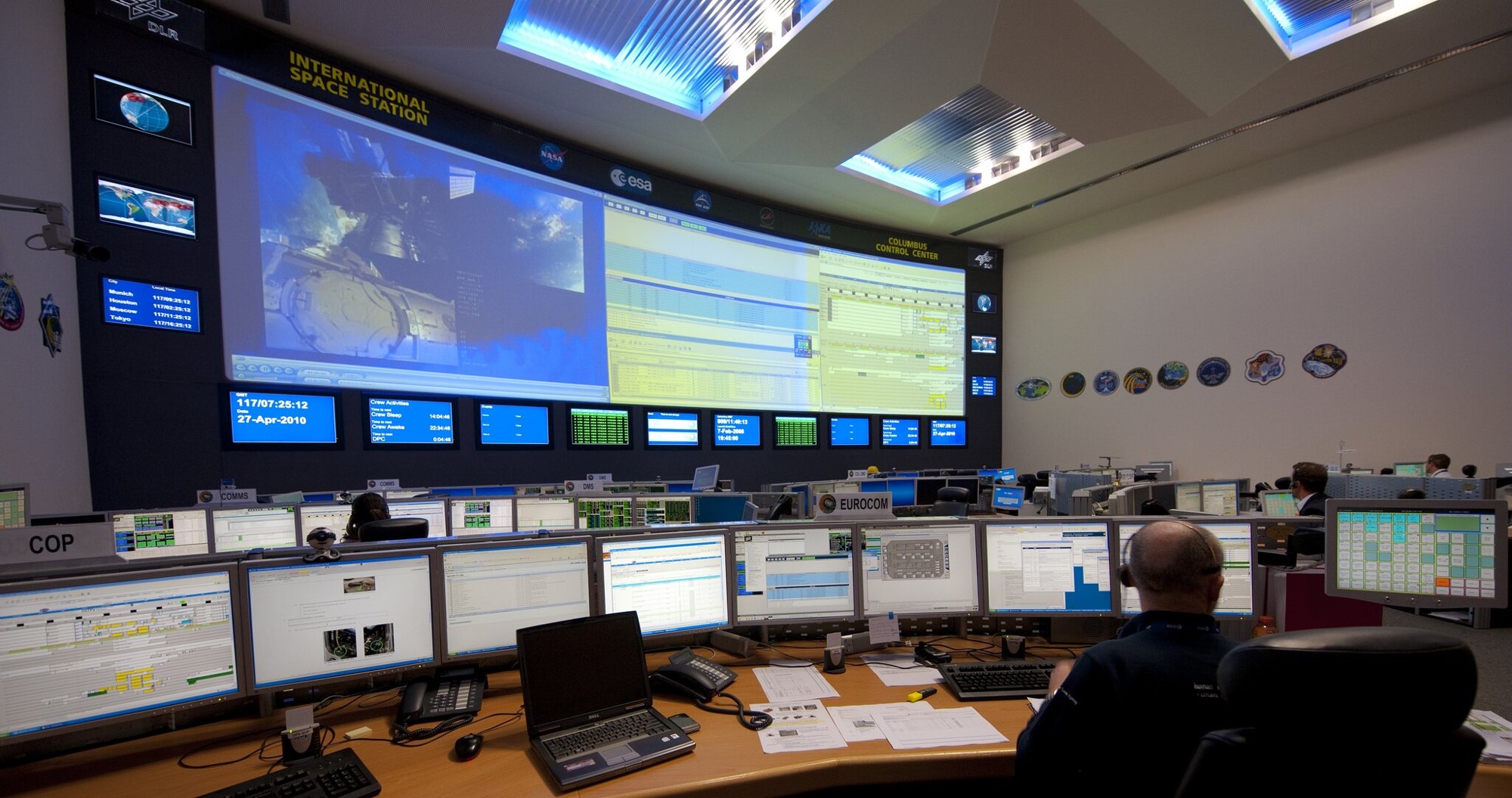
Multi-hazard low-carbon resilient technologies and multi-scale digital services for a future-proof, sustainable & user-centred built environment.
Click to read more
Project leader(s): Prof. Mauro Overend, Dr. Simona Bianchi
Date range: 2024 - 2028
Focus: Multi-hazard low-carbon resilient technologies and multi-scale digital services for a future-proof, sustainable & user-centred built environment. Decision-support tools & low-carbon technologies for multi-hazard resilient buildings. The built environment is ill-prepared for more frequent and increasingly intense climate-related extreme events. These cause severe socio-economic losses and adversely affects public health. Recent scientific and technological advances in the construction industry provide timely solutions for improving the resilience of buildings for specific hazards, but these are often not cost effective or eco-friendly. There is a lack of frameworks for assessing the climate resilience, making it challenging to develop optimal solutions for multi-hazard scenarios.
Research team: Dr. Alessandra Luna-Navarro, Dr. Azarakhsh Rafiee, Prof. Peter van Oosterom, Dr. Thaleia Konstantinou
Partners: Priedemann Facade Experts, IES R&D, National Institute for Earth Physics, Sapienza University of Rome, Residenziale, Boom Builds, OMRT, Rothoblas, Arup, Prim?ria Municipiului Tecuci, Hölscher.
Keywords: multi-hazard resilience, low-carbon technologies, sustainable built environment, user-centered design, decision-support tools, climate resilience, resilient buildings, extreme events, socio-economic impact, public health, construction industry innovation, eco-friendly solutions, multi-scale digital services, hazard assessment framework, future-proof design
Multi-hazard low-carbon resilient technologies and multi-scale digital services for a future-proof, sustainable & user-centred built environment.
DATALESs
Lead: Dr. Ing. Thaleia Konstantinou
2022 - 2026
Data-driven green building modelling, energy management & building cluster federation
Click to read more
Project leader(s): Dr. Ing. Thaleia Konstantinou
Date range: 2022 - 2026
Focus: Integration of a large number of distributed energy resources (DERs), such as distributed wind and PVs systems as well as the increasing electrification of the heating and transport sector poses great challenges on distribution and transmission network operation. In this situation, local energy systems (LESs) and green buildings open up new possibilities to utilize local, renewable energy sources in a decentralized way as well as to provide operational support. However, their role and potential in urban areas are, yet, underdeveloped. Here, a major challenge is how to integrate the thousands of controllable elements in LESs and green buildings into traditional control or optimization frameworks while still guaranteeing optimal system-level objectives. In line with this, we aim to develop a new data-driven operational paradigm for LESs from cyber-physical-societal perspectives, with a special focus on DERs integration, LESs and green building flexibility exploring, and actor integration. The project comprises six Work Packages. TUDelft-BK is involved in WP3 (Data-driven green building modelling and energy management). The main tasks within this WP include data-driven modelling of green building, physics-integrated machine learning for building energy management, federation and coordination of building cluster energy information and design of energy saving scheme based on field lab validation.
Research team: Prof. dr. ir. Peter van Oosterom, Dr. Azarakhsh Rafiee
Partners: TU Delft (EWI), The Hague University of Applied Science, PEPITe S.A, Geodan, Tsinghua University, Zhejiang Universit, Jibei Power Exchange Center Ltd. Co., Alliander
Keywords: distributed energy resources, DERs, local energy systems, LESs, green buildings, renewable energy, decentralized energy, energy management, building flexibility, data-driven modelling, physics-integrated machine learning, building cluster coordination, energy optimization, cyber-physical-societal systems, electrification, PV systems, wind energy, operational support
Data-driven green building modelling, energy management & building cluster federation
Ongoing PhD Projects
Data-Driven Green Building Modeling and Energy Management
Author: Amin Jalilzadeh
Click to read more
Author: Amin Jalilzadeh
Promoters: Prof. Dr. Peter van Oosterom, Dr. Thaleia Konstantinou, Dr. Azarakhsh Rafiee
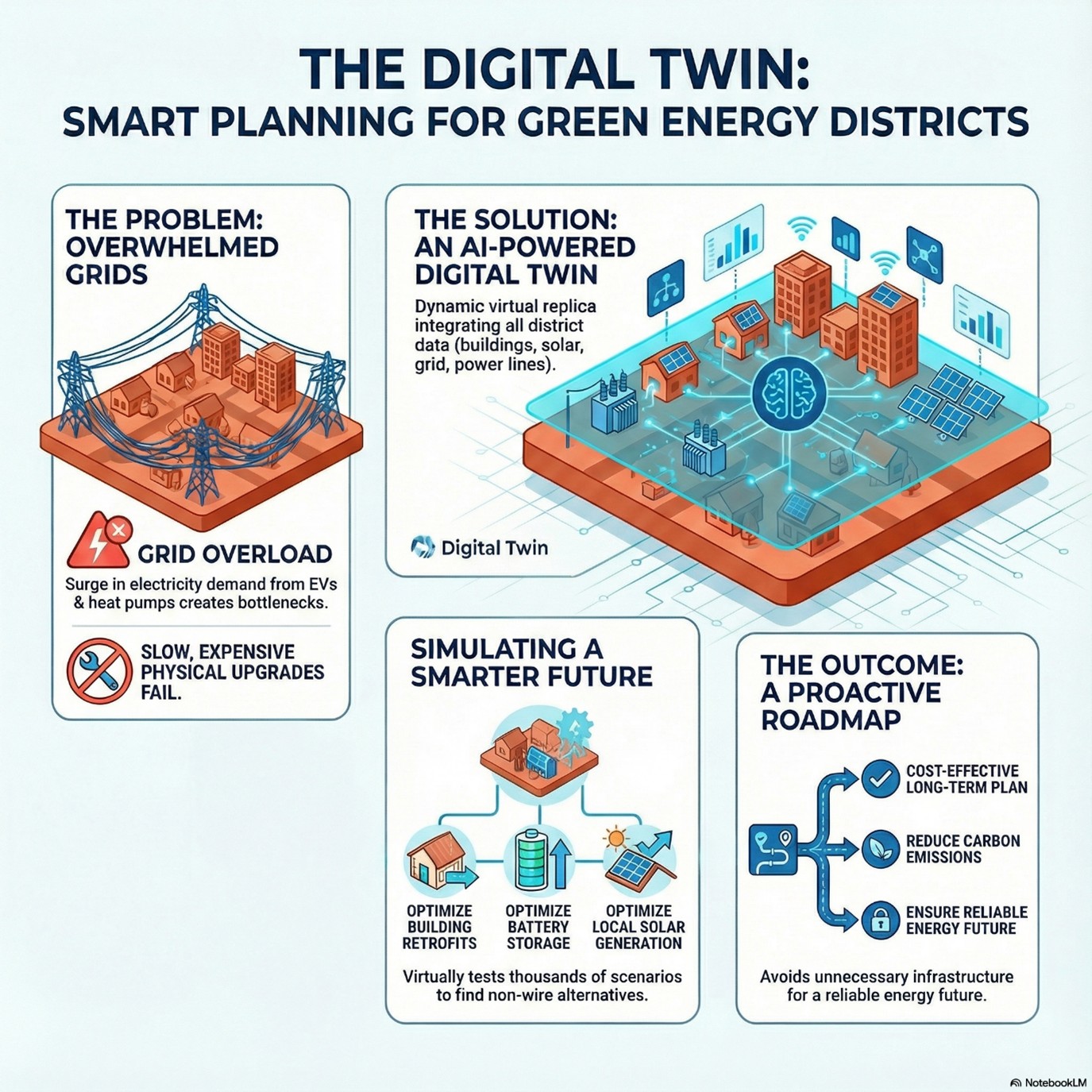
This research develops an integrated Digital Twin framework that transforms district-level energy planning from reactive infrastructure expansion to proactive, coordinated optimization. Traditional approaches treat buildings and energy grids as separate systems, leading to inefficient planning where building retrofits proceed without considering grid impacts, and grid expansions occur without leveraging building flexibility. This project addresses three critical gaps: the semantic disconnect between building and grid data systems, the temporal gap between operational insights and strategic planning, and the sequential dependencies in intervention strategies. The framework combines automated Urban Building Energy Modeling (UBEM) for the Netherlands, Physics-Informed Machine Learning for building optimization, Graph Neural Networks (GNN) for grid analysis and energy community formation, and Deep Reinforcement Learning (DRL) for strategic multi-objective planning. By creating a unified data infrastructure through Knowledge Graphs and enabling AI-driven optimization across scales and timeframes, this work advances Digital Twins from monitoring technologies to autonomous planning platforms. The framework enables data-driven pathways toward Positive Energy Districts by coordinating building-grid co-evolution, transforming how stakeholders navigate the complexity of district energy transitions while balancing competing objectives of decarbonization, affordability, and grid reliability.
Towards Architectural heritage information Infrastructure
Author: Yingwen Yu
Click to read more
Author: Yingwen Yu
Promoters: Prof. dr. ir Peter van Oosterom & Prof. dr. ing Uta Pottgiesser, Ir. Edward Verbree
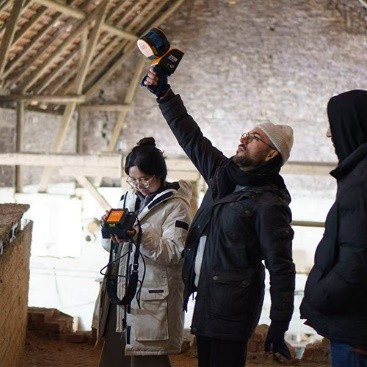
This research project aims to design an Architectural Heritage Information Infrastructure (AHII) that integrates different digital models for structured and semantically enriched management of architectural heritage. The AHII will (1) collect digital data and information about architectural heritage, including point clouds, 3D Gaussian Splatting models, HBIM models, interactive maps, geo-referenced narratives, and audio-visual materials; (2) structure and semantically annotate this information according to international standards, partly to be further developed within the project; (3) manage the resulting assets in a heritage register/database; and (4) disseminate and visualize architectural heritage through web services that support viewing, downloading, and processing. Multiple use cases will demonstrate how the AHII supports systematic digital archiving, long-term preservation, and sustainable management of architectural heritage, while enabling flexible and timely integration of heterogeneous information layers among communities, researchers, industry, and other stakeholders. Ultimately, the AHII will provide both experts and the public with rich, multi-layered information and immersive virtual experiences of historic buildings and sites.
Reinforcement Learning to Support Collaborative Structural Design with Reused Materials
Author: Lisa-Marie Mueller
Click to read more
Author: Lisa-Marie Mueller
Promoters: Gabriele Mirra, Michela Turrins
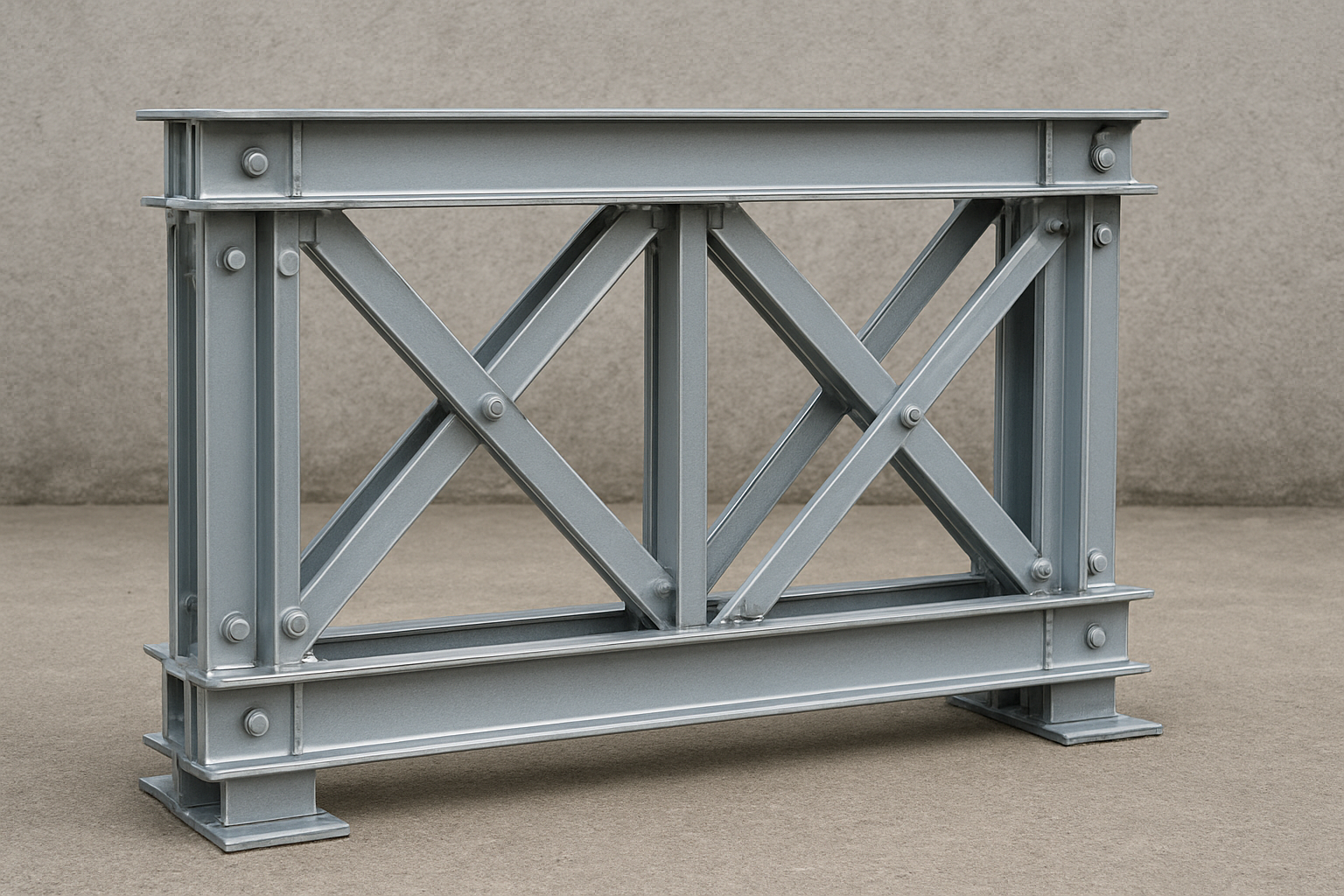
The construction industry uses 50% of global raw materials, generates 30% of global solid waste, and contributes to 20% of carbon emissions. The reuse of materials is a key strategy for reducing the environmental impact of construction. Reinforcement learning (RL) models are uniquely suited to support decision making under uncertainty and to consider complex problems with a wide range of considerations. For reuse, RL models can support designers and engineers with a bottom-up, curiosity-driven approach to designing with reused materials. As using artificial intelligence (AI) becomes more common, the collaboration between engineers and these tools needs to be designed and considered to best integrate into the design process.
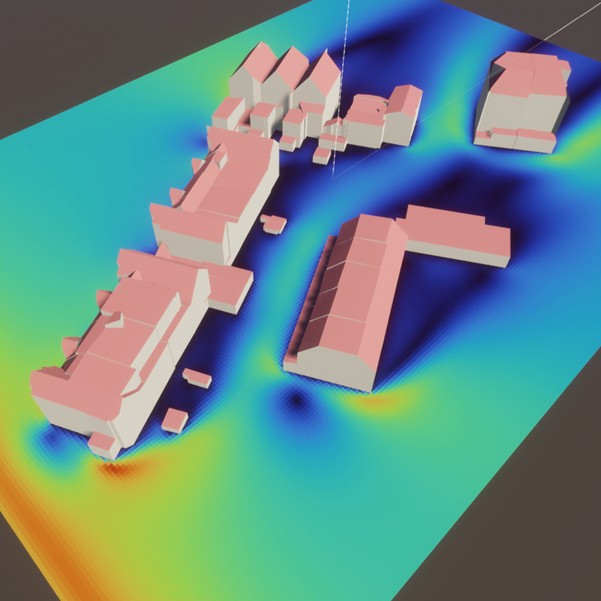
Game Engine-GIS-Simulation System for Wind and Noise Simulations
Author: Xuanchen Zhou
Click to read more
Author: Xuanchen Zhou
Promoters: Prof. Peter van Oosterom, Dr. Azarakhsh Rafiee
Wind and noise are both key environmental factors that can significantly impact urban livability, making them critical considerations in urban planning. Given the complexity of planning processes, where design decisions must be evaluated and refined iteratively, there is a strong need for accurate and timely feedback on the environmental impact of proposed urban layouts. A (near) real-time simulation system for wind and noise would greatly facilitate this process by enabling more informed and responsive decision-making. This PhD project focuses on developing a game engine-geographic information system (GIS)-simulation system to support this decision-making process. Through the seamless cooperation of those components, a fast and interactive system can be built. Using information from various web services, an urban digital twin that supports manipulation of scene elements can be constructed inside the game engine. The digital twin is then utilized to perform mesh-based wind simulation and ray tracing-based noise simulation. Through algorithm optimization and GPU acceleration, this project aims to achieve accurate and (near) real-time simulation results. Decision makers can interact with the simulation through multiple interfaces, receiving immediate and informative feedback of the wind and noise levels of current urban building layout.
Past Research Projects
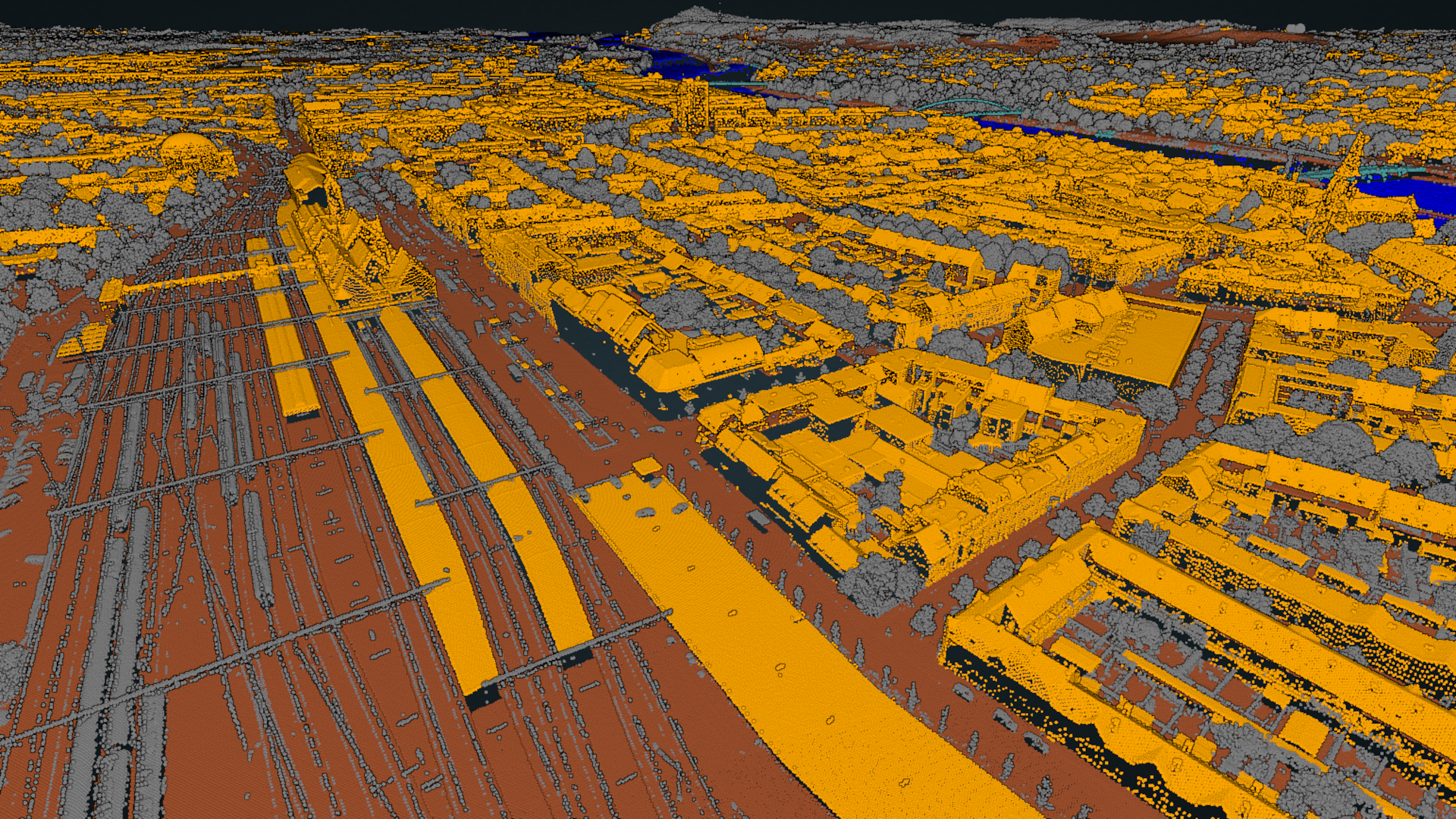
nD-PC Multi-dimensional Point Clouds
Lead: Prof.dr.ir. P.J.M. (Peter) van Oosterom
2022 - 2025
Developing a scalable Open Point Cloud Map infrastructure for efficient visualization and management of massive spatio-temporal 3D data with continuous zoom and progressive streaming.
Click to read more
Project leader(s): Prof.dr.ir. P.J.M. (Peter) van Oosterom
Date range: 2022 - 2025
Focus: The main challenge in this proposal is to realize a distributed Open Point Cloud Map (OPCM) scalable infrastructure with High Performance/Throughput Computing (HPC/HTC) and enable interactive visualization using perspective views without data density shocks, continuous zoom-in and out and progressive data streaming between server and client. Big geo-data requires good spatio-temporal data organization, including levels of detail that allow to zoom in from high-level overviews (complete countries/continents) to the smallest detail (as the curb stones of a sidewalk) and everything in between. The world’s largest point cloud data sets, despite their potential high value, are heavily underexploited due to the problematic data management, access, and limited software tools that are able to directly employ them. This project aims to realize the paradigm shift from raster and vector representations to the new, highly efficient, nD-PointCloud representation with deep integration of space, time, scale/continuous Levels of Importance (cLoI) dimensions.
Research team: dr. Vitali Diaz Mercado, dr.ir. Martijn Meijers
Partners: Netherlands eScience center (by SURF & NWO)
Keywords: Open Point Cloud Map, OPCM, high-performance computing, HPC, high-throughput computing, HTC, interactive visualization, perspective views, progressive data streaming, big geo-data, spatio-temporal data, levels of detail, nD-PointCloud, continuous Levels of Importance, cLoI, raster to point cloud, scalable infrastructure, data management.
Developing a scalable Open Point Cloud Map infrastructure for efficient visualization and management of massive spatio-temporal 3D data with continuous zoom and progressive streaming.

Wood Without Trees Research Project
Lead: Dr. MSc.Arch. M. Turrin
2022
Wood Without Trees explores upcycling lignocellulosic waste into fully biobased, 3D-printable materials for high-performance building components, promoting circularity, reduced emissions, a…
Click to read more
Project leader(s): Dr. MSc.Arch. M. Turrin
Date range: 2022
Focus: Wood is typically a well-recognized option by society, and the widely available processed timber presents remarkable properties. However, its use comes with drawbacks related to excessive waste from conventional subtractive fabrication processes, need of adhesives (which are often toxic or based on fossil resources), and difficulties in the fabrication of complex geometries. The strength of wood derives from its building blocks (lignocellulosic fibres), which are the most abundant biopolymers in nature. Cellulose is commonly used as raw material in the paper industry and as a fibre reinforcement on bio-based composite. Lignin is a by-product from the same industry, usually burnt as an energy source. They can be extracted from several waste streams, including agricultural and forestry waste. When combined, they can create a fully natural material with similar characteristics to timber but with potentially adjustable mechanical properties and more freedom to generate complex structures. The on-going Wood Without Trees project studies a solution to upcycle both components into a fully biobased material for additive manufacturing. The project aims to be a stepping stone toward full circularity (from locally sourced bio-waste streams to material recyclability within the construction industry) while allowing for easy to tune material properties and high-performance building components thanks to 3D printing – and thereby resulting in reduced greenhouse gases emissions and waste.
Partners: T.R.H. Liebrand Holding B.V. , Wageningen University & Research
Keywords: wood, biobased materials, lignocellulosic fibres, cellulose, lignin, additive manufacturing, 3D printing, circular construction, upcycling, sustainable building materials, bio-waste, complex geometries, high-performance components, green construction
Wood Without Trees explores upcycling lignocellulosic waste into fully biobased, 3D-printable materials for high-performance building components, promoting circularity, reduced emissions, and design freedom.

3D Land Administration
Exploring 3D Cadastres to improve legal registration of complex spatial objects, supporting volumetric property rights in densely built environments.
Click to read more
Focus: In the past decade various activities have been conducted related to 3D Cadastres. The start of the international awareness of this topic was marked by the first Workshop on 3D Cadastres (sponsored by FIG commissions 3 and 7), organized by Delft University of Technology in November 2001. This was followed by virtually a session at every FIG working week and congress afterwards (stimulated by the 2002-2006 FIG working group on 3D Cadastres). Within cadastral organizations this was paralleled by on-going developments at Cadastral organizations in many countries to provide better 3D-support. The increasing complexity of infrastructures and densely built-up areas requires a proper registration of the legal status (private and public), which only can be provided to a limited extent by the existing 2D cadastral registrations. Despite all research and progress in practise, no country in the world has a true 3D Cadastre, the functionality is always limited in some manner; e.g. only registering of volumetric parcels in the public registers, but not included in a 3D cadastral map, or limited to a specific type of object with ad hoc semi-3D solutions; e.g. for buildings or infrastructure. At the FIG Congress in April 2010 in Sydney it was decided to form again a working group on 3D Cadastres in order to make further progress with the subject. The registration of the legal status in complex 3D situations will be investigated under the header of 3D Cadastres. Starting point of the working group is the observation that increasingly information is required on rights, use and value in complex spatial and/or legal situations.
Keywords: 3D, Interoperability, Standardization, Land Administration Domain Model (LADM), Building Information Model (BIM), Land Administration System (LAS), Spatial Development Lifecycle
Exploring 3D Cadastres to improve legal registration of complex spatial objects, supporting volumetric property rights in densely built environments.
IEBB - Theme 4: Digitizing the Renovation Process
2020 - 2021
Automated parametric design and 3D printing of building components for energy-efficient, passive building solutions.
Click to read more
Date range: 2020 - 2021
Focus: The goal of this project is to develop an automated process to optimize and manufacture building components enabling passive design toward energy transition. The process involves the parametric generation of multiple design configurations optimized for minimal energy consumption and allows the end user to select a custom solution. Starting with a digital model of existing buildings, the process includes parametric design, optimization, and 3D printing using artificial intelligence. Furthermore, in this project concepts are developed and demonstrated (e.g. sunshading and trombe walls), which illuminate the entire process from parametric optimization to user preferences and final production.
Research team: Özgün Balaban (Post Doctoral Researcher), Sevil Sariyildiz, Martin Tenpierik, Thaleia Konstantinou, Serdar Asut, Paul de Ruiter, Michela Turrin
Partners: TU Eindhoven, VolkerWessels, ESTECO SPA, Arup bv, TU Delft, Royal 3D, Saint Gobain
Keywords: automated building components, parametric design, energy optimization, passive design, 3D printing, artificial intelligence, custom solutions, sunshading, trombe walls, energy transition
Automated parametric design and 3D printing of building components for energy-efficient, passive building solutions.
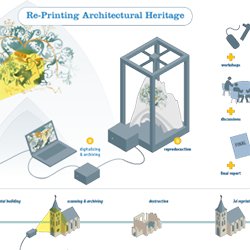
REPRINTING ARCHITECTURAL HERITAGE
Lead: Prof. dr. ir. Carola Hein
2017 - 2018
A pilot study was proposed includes high-definition scanning and 3D printing of a heritage structure at the building scale.
Click to read more
Project leader(s): Prof. dr. ir. Carola Hein
Date range: 2017 - 2018
Focus: As scientists in private and public settings develop new technologies for 3D scanning and 3D printing at the scale of paintings, ornaments, building parts, they encounter questions related both to technical possibilities and usability of 3D printing at the scale of the building with high resolution. We are convinced that these developments can propel technological, heritage and architectural design discussions forward in each field and in connection to each other. We propose a pilot that includes high-definition scanning and 3D printing of a pilot structure, the Hippolytuskerk Middelsum, at a building scale that challenges high-precision 3D printing developed for paintings to take on the building scale, its multiple dimensions and materials, and to connect to heritage specialist and designers to rethink the applicability of the new technique in academia, practice and education.
Research team: ir. John Hanna, ir. Miktha Farid, Dr. Serdar A?ut, Dr. M. Turrin, Prof.dr.ing. C. Hein, Prof.dr. Joris Dik
External research teams: TU Eindhoven – Prof. ir. J. Bekkering et al.
Keywords: 3D scanning, high-definition scanning, large-scale 3D printing, architectural heritage, digital fabrication, building-scale prototyping, high-resolution printing, heritage conservation, computational design, interdisciplinary research
A pilot study was proposed includes high-definition scanning and 3D printing of a heritage structure at the building scale.
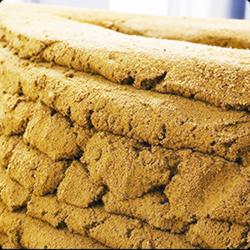
TERRA-ink
Lead: Dr. MSc.Arch. M. Turrin
2017 - 2018
TERRA-ink aimed at developing a method for layering local soil, by implementing 3D printing technologies.
Click to read more
Project leader(s): Dr. MSc.Arch. M. Turrin
Date range: 2017 - 2018
Focus: TERRA-ink aimed at developing a method for layering local soil, by implementing 3D printing technologies. With the aid of such a construction system, the goal was to create durable structures that can be easily de-constructed once they served their purpose. The use of locally sourced materials in combination with additive manufacturing is investigated aiming at reductions in financial investments, resources and human labor, as well as at simplified logistics, low environmental impact and adaptability to different situations and requirements. Such a building system has the potential of combining low and high-tech technologies, in order to facilitate a fully open and universal solution for large scale 3D-printing using any type of soil.
Research team: ir. Tommaso Venturini, MSc. Arch. Foteini Setaki, Dr.ir. Fred Veer, Ammar Taher
External research teams: TU Eindhoven - ir. A.D.C. (Arno) Pronk, Prof. Dr. ing. Patrick Teuffel, Yaron Moonen, Stefan Slangen, Rens Vorstermans
Keywords: TERRA-ink, 3D printing, local soil, additive manufacturing, deconstructable structures, sustainable construction, low environmental impact, large-scale 3D printing, adaptable building system, low and high-tech integration
TERRA-ink aimed at developing a method for layering local soil, by implementing 3D printing technologies.
Double Face 2.0
Lead: Dr.ir. M.J. Tenpierik, Dr. MSc.Arch. M. Turrin
2016 - 2018
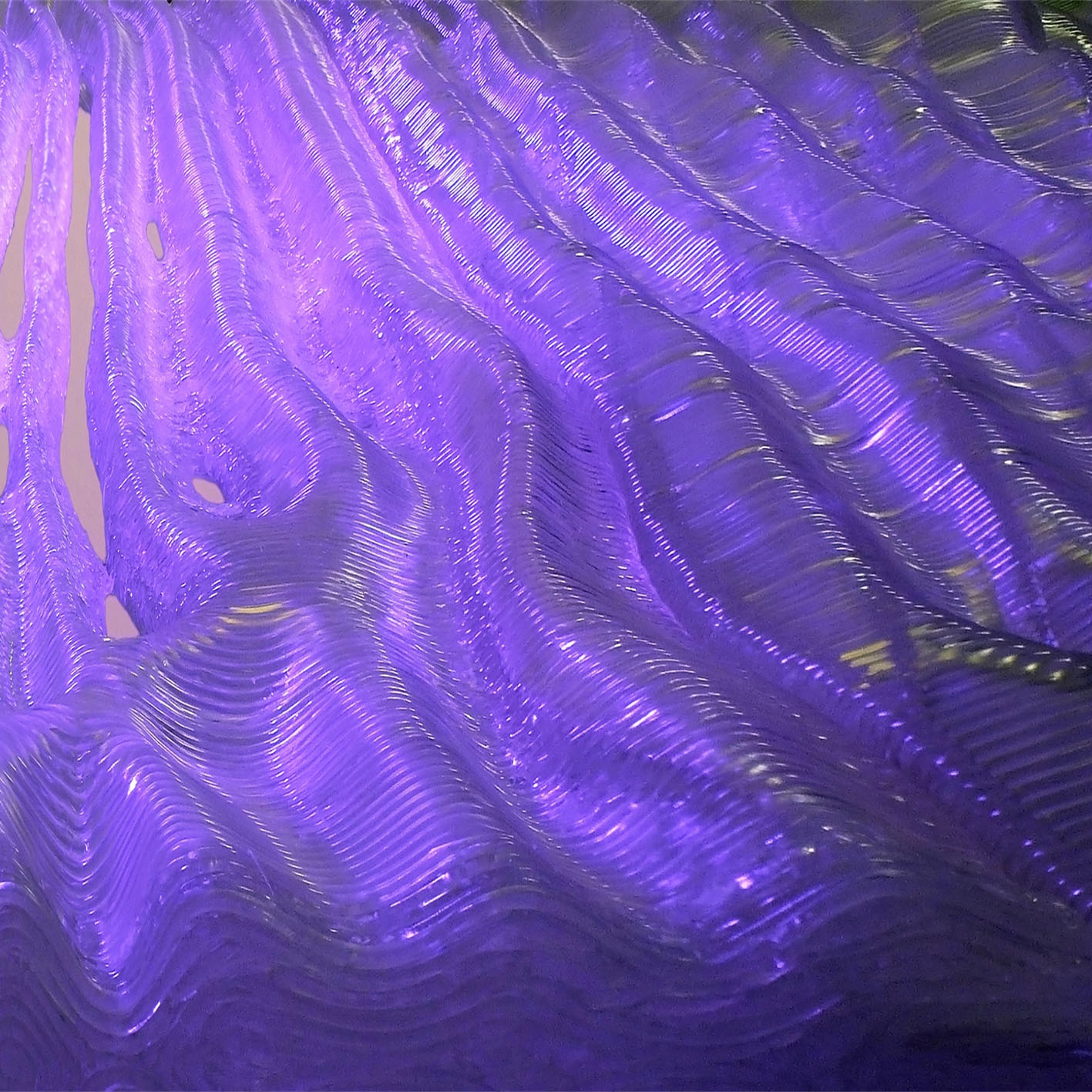
Double Face 2.0 is a novel solar wall, joining a strong design identity and high technical performances.
Click to read more
Project leader(s): Dr.ir. M.J. Tenpierik, Dr. MSc.Arch. M. Turrin
Date range: 2016 - 2018
Focus: Double Face 2.0 is a novel solar wall, joining a strong design identity and high technical performances. During the Double Face 2.0 project thermal, daylight and manufacturing performance aspects were such design drivers in the development of an innovative lightweight translucent Trombe wall (solar wall). The proposed wall overcomes the limitations of traditional Trombe walls, which are usually massive and obstructive. It uses new materials like phase change material (PCM) for heat storage and aerogel for thermal insulation, has an optimised shape for best thermal performance, is manufactured using robotic 3D (FDM) printing, allows daylight to pass through and can be adapted according to the varying conditions at hand. By optimising and shaping geometry, the final design has good engineering performance and at the same time offers new creative opportunities for the designers.
Research team: Stavroula Tsafou MSc, Tudor Cosmatu MSc, Ir. Yvonne Wattez
Partners: GlassX, Esteco, Rubitherm, Arup, Shau Architecture and Urban design
Keywords: Double Face 2.0, solar wall, translucent Trombe wall, phase change material (PCM), aerogel insulation, thermal performance, daylight performance, robotic 3D printing, lightweight facade system, parametric geometry optimization
Double Face 2.0 is a novel solar wall, joining a strong design identity and high technical performances.
Spong3D
Lead: Dr. MSc. Arch. M. Turrin
2016 - 2017
This research investigated the potentials of Additive Manufacturing porous structures for thermal performances, and more specifically thermal insulation and heat storage.
Click to read more
Project leader(s): Dr. MSc. Arch. M. Turrin
Date range: 2016 - 2017
Focus: This research investigated the potentials of Additive Manufacturing porous structures for thermal performances, and more specifically thermal insulation and heat storage. It focused on the potentials of AM for an adaptive facade system that optimizes thermal performances according to different environmental conditions. The main general objective was is to prove that AM 3d printing technology enables the creation of mono-material façade components that integrate multiple functions. The specific objective was to create a plastic façade panel that can regulate the temperature inside a building throughout the whole year. It used the thermal properties of porous structures and the heat storage capacity of liquids. The final product is a proof of concept for an adaptive façade panel that controls the heat exchange between the indoor and the outdoor environment by integrating geometries for thermal insulation and heat storage, while guaranteeing structural strength.
Research team: ir. Maria Valentini Sarakinioti, Dr.ir.arch. MJ.Tenpierik, Dr.Ing.MSc.T.Konstantinou, Prof.dr.ing.U.Knaack, MArch.M.Teeling, ir.P.de Ruiter, ir.M.vanErk
External research teams: TU Eindhoven - MSc. M.L. de Klijn, ir.A.D.C. Pronk, prof.Dr.-Ing. P.M.Teuffel, A.J.van Lier, R.L.G.Vorstermans, E. Dolkemade, prof.dr.ir. J.L.M. Hensen, ir. R.C.G.M. Loonen
Partners: KIWI Solutions (Dick Vlasblom)
Keywords: Additive Manufacturing, 3D printing, porous structures, thermal performance, thermal insulation, heat storage, adaptive façade, mono-material components, façade systems, energy efficiency
This research investigated the potentials of Additive Manufacturing porous structures for thermal performances, and more specifically thermal insulation and heat storage.
ADAM - OPEN TECHNOLOGIEPROGRAMMA NWO
Lead: Prof.dr.ir. Arjan van Timmeren
2015 - 2018
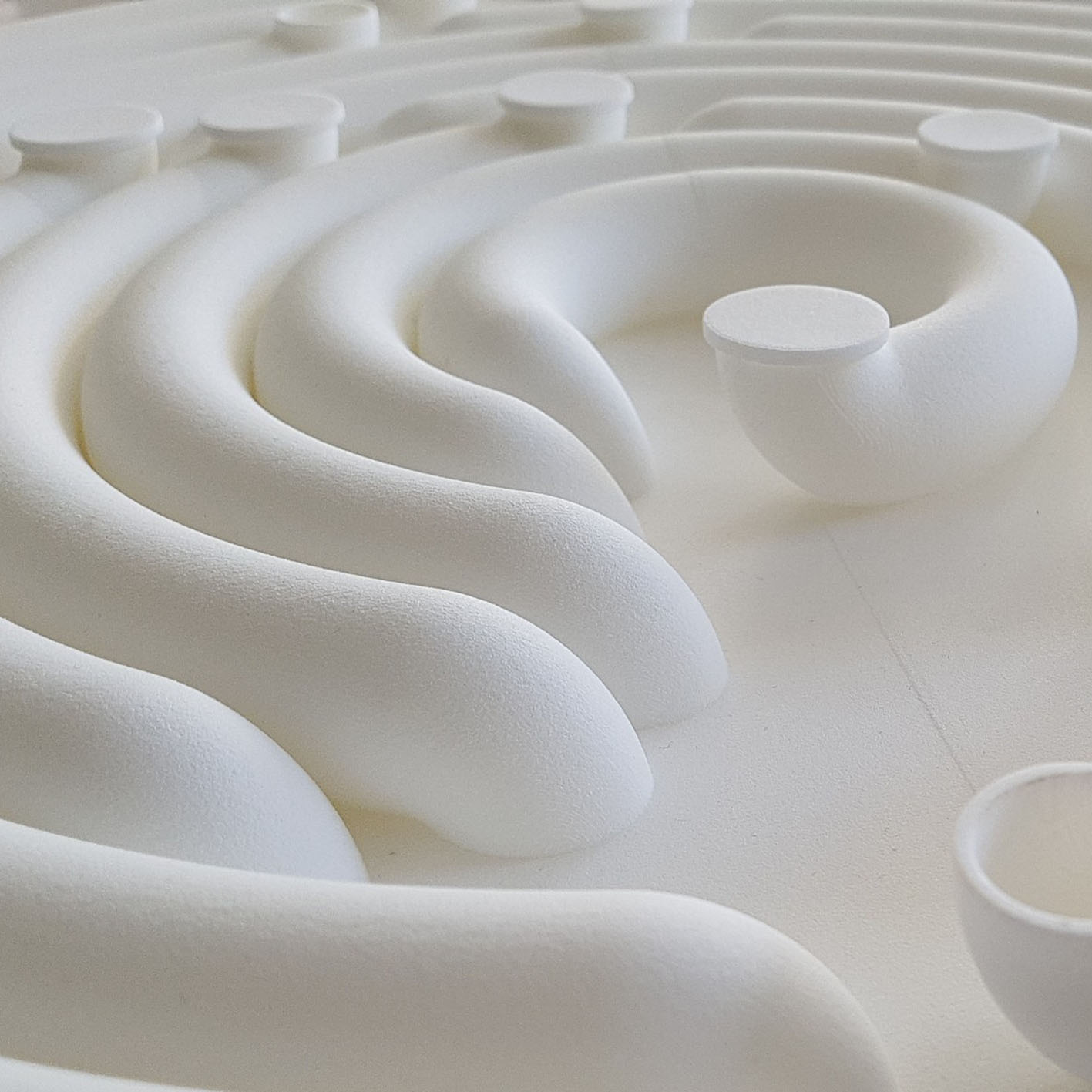
A new cutting-edge acoustic device is proposed that regulates its performance by its geometrical characteristics based on interference principles.
Click to read more
Project leader(s): Prof.dr.ir. Arjan van Timmeren
Date range: 2015 - 2018
Focus: Existing absorption technologies are strongly limited by traditional materials, design and production processes and consequently do not cover the increasingly required demand in customization, optimized performance and complex shapes. ADAM explores the merging of the academic and industrial fields of Room Acoustics, Additive Manufacturing and Parametric Modelling. A new cutting-edge acoustic device is proposed that regulates its performance by its geometrical characteristics based on interference principles. The developed absorbers are easily customizable and point towards new acoustic structures with highly tuned performance and increased freedom in design and material choice.
Research team: Ir. Foteini Setaki, dr. ir. Fengnian Tian, dr.MSc.Arch. Michela Turrin, dr.ir. Martin Tenpierik
Partners: Arup, Merford, Materialise, Peutz
Keywords: ADAM, room acoustics, additive manufacturing, parametric modelling, acoustic absorbers, customizable design, optimized performance, complex geometries, interference principles, innovative materials
A new cutting-edge acoustic device is proposed that regulates its performance by its geometrical characteristics based on interference principles.
Computational Design for Sport Buildings
Lead: Dr. MSc.Arch. M. Turrin
2014 - 2016
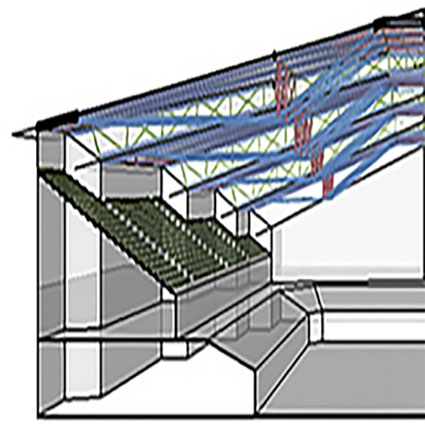
The project deals with the concept of Multi-objective Multidisciplinary design optimization techniques to support trade-off decisions between multiple conflicting design objectives
Click to read more
Project leader(s): Dr. MSc.Arch. M. Turrin
Date range: 2014 - 2016
Focus: The design of sport buildings has great impact on top-sport as well as on recreational sport-activities. The project deals with the concept of Multi-objective Multidisciplinary design optimization techniques to support trade-off decisions between multiple conflicting design objectives and interdisciplinary design methodology, during the conceptual design of sport buildings. The proposed method is based on parametric modelling, performance simulation tools and algorithms for computational optimization, for which the project tackles three specific aspects. Firstly, variable screening techniques are investigated to refine the design space before running the optimization, and thus make the optimization more efficient and feasible within the limited time-frame of real projects. Secondly, a customized computational process for the rapid assessment of temperature and airflow patterns is developed. Thermal and daylight objectives are combined with structural optimization. Thirdly, the process requires the combination of design optimization and design exploration, while searching for well-performing solutions, for which multivariate analysis algorithms are engaged into the post processing of numerous optimization data.
Research team: ir. Antonio D'Aquilio, ir. Rusne Sileryte, ir. Ding Yang, ir. Pan Wang
Partners: SCUT, Arup, ESTECO
Keywords: sport buildings, multi-objective optimization, multidisciplinary design, parametric modelling, performance simulation, computational optimization, thermal and daylight analysis, structural optimization, design exploration, multivariate analysis
The project deals with the concept of Multi-objective Multidisciplinary design optimization techniques to support trade-off decisions between multiple conflicting design objectives

DOUBLEFACE 4TU LIGHTHOUSE PROJECT
Lead: Dr. MSc.Arch. M. Turrin
2014 - 2015
The project designed and prototyped a modular system for adjustable translucent thermal mass, based on an innovative (digital) approach to thermal principles of trombe walls.
Click to read more
Project leader(s): Dr. MSc.Arch. M. Turrin
Date range: 2014 - 2015
Focus: Goal of this project was designing and prototyping an adjustable translucent modular system featuring thermal insulation and thermal absorption in a calibrated manner. Specifically, the project designed and prototyped a modular system for adjustable translucent thermal mass, based on an innovative (digital) approach to thermal principles of trombe walls. Effort was addressed especially towards lightweight options for thermal inertia. The system aimed at passively improving thermal comfort. The project outputs provided a test case and demonstrator of the design principles.
Research team: Dr.ir. M.J. Tenpierik, Ir. C. Chang, Ir. P. de Ruiter, Ir. W. Meijer, Ir. W.H. van der Spoel
External research teams: TU Eindhoven - Dipl.-ing. F. Heinzelmann, Prof. dr.-ing. P. Teuffel, Ing. W. van Bommel
Keywords: adjustable modular system, translucent panels, thermal insulation, thermal absorption, thermal mass, trombe walls, lightweight design, passive thermal comfort, digital design, prototype
The project designed and prototyped a modular system for adjustable translucent thermal mass, based on an innovative (digital) approach to thermal principles of trombe walls.
Past PhD Projects
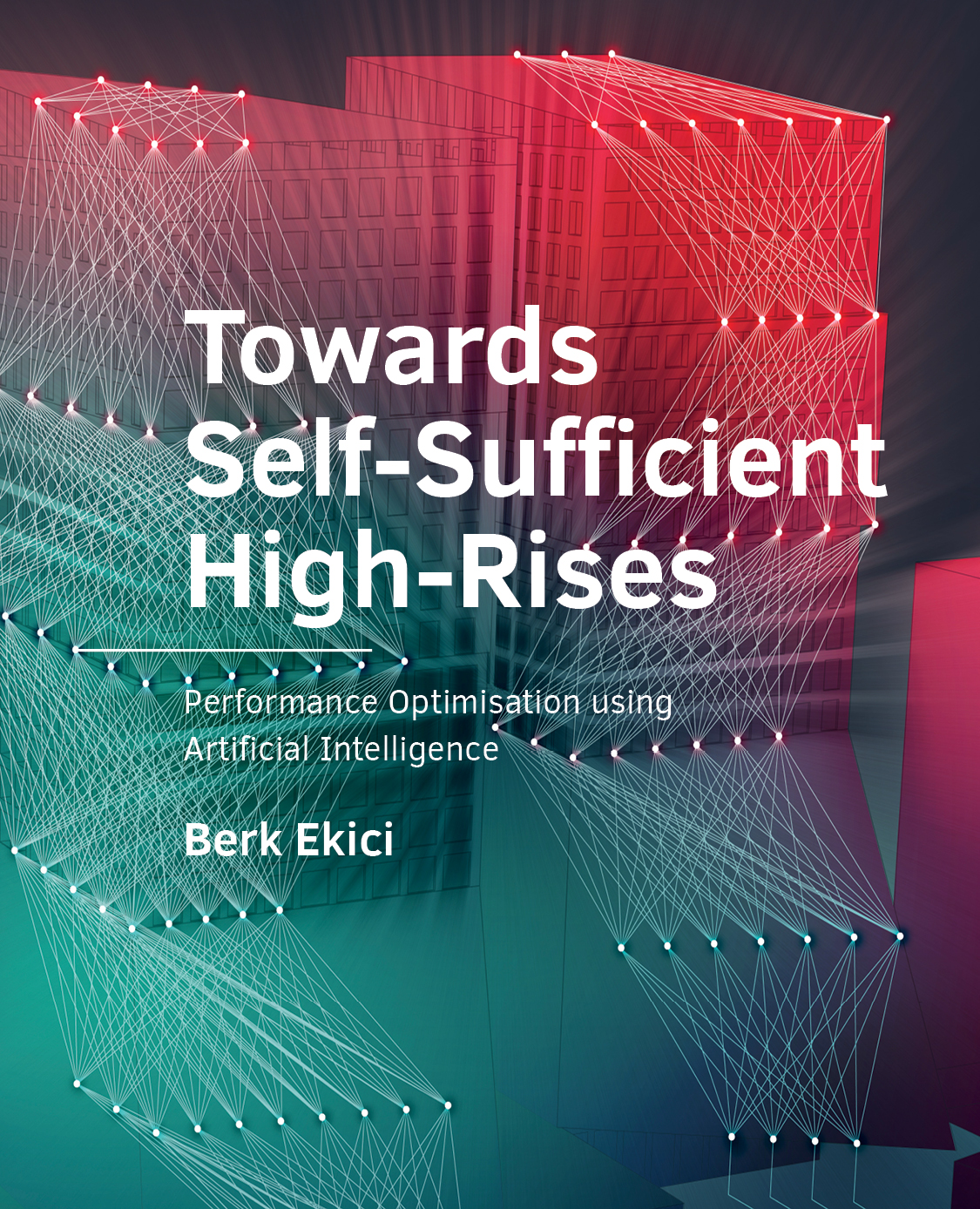
Towards Self-Sufficient High-Rises. Performance Optimisation using Artificial Intelligence
Author: Berk Ekici
Defended: 2022
Click to read more
Author: Berk Ekici
Promoters: Prof. dr. Sevil Sariyildiz, Prof. dr. Mehmet Fatih Tasgetiren, Dr. Michela Turrin
Keywords: High-rise buildings, Self-sufficiency, Energy, Food, Daylight, Performance-based design, Machine learning, Optimisation
Population growth and urbanisation trends bring many consequences related to the increase in global energy consumption and CO2 emissions and decrease in arable land per person. Alternative design proposals for sustainable living are on the agenda of researchers and professionals to respond to the needs of the 21st century for a sustainable future. Since the early examples in the 19th century, the high-rises have been one of the inevitable buildings of metropolises to provide extra floor space in compact cities. Based on the facts of the 21st century, high-rise buildings should fulfil more than provide extra floor space in the limited urban plot. This research suggests “self-sufficient high-rise buildings” that can generate and efficiently consume vital resources in addition to dense habitation for sustainable living. Optimisation of high-rise buildings has been the focus of researchers because of significant performance enhancement, mainly in energy consumption and generation. However, optimisation of self-sufficient high-rise buildings requires the integration of multiple performance aspects related to the vital resources of human beings (e.g., energy, food, and water) and consideration of large numbers of design parameters related to these multiple performance aspects. Hence, the complexity of self-sufficient high-rise buildings is more challenging than optimising regular high-rises that have not been addressed in the literature. The purpose of this dissertation is to present a framework for performance optimisation of self-sufficient high-rise buildings using artificial intelligence focusing on the conceptual phase of the design process.
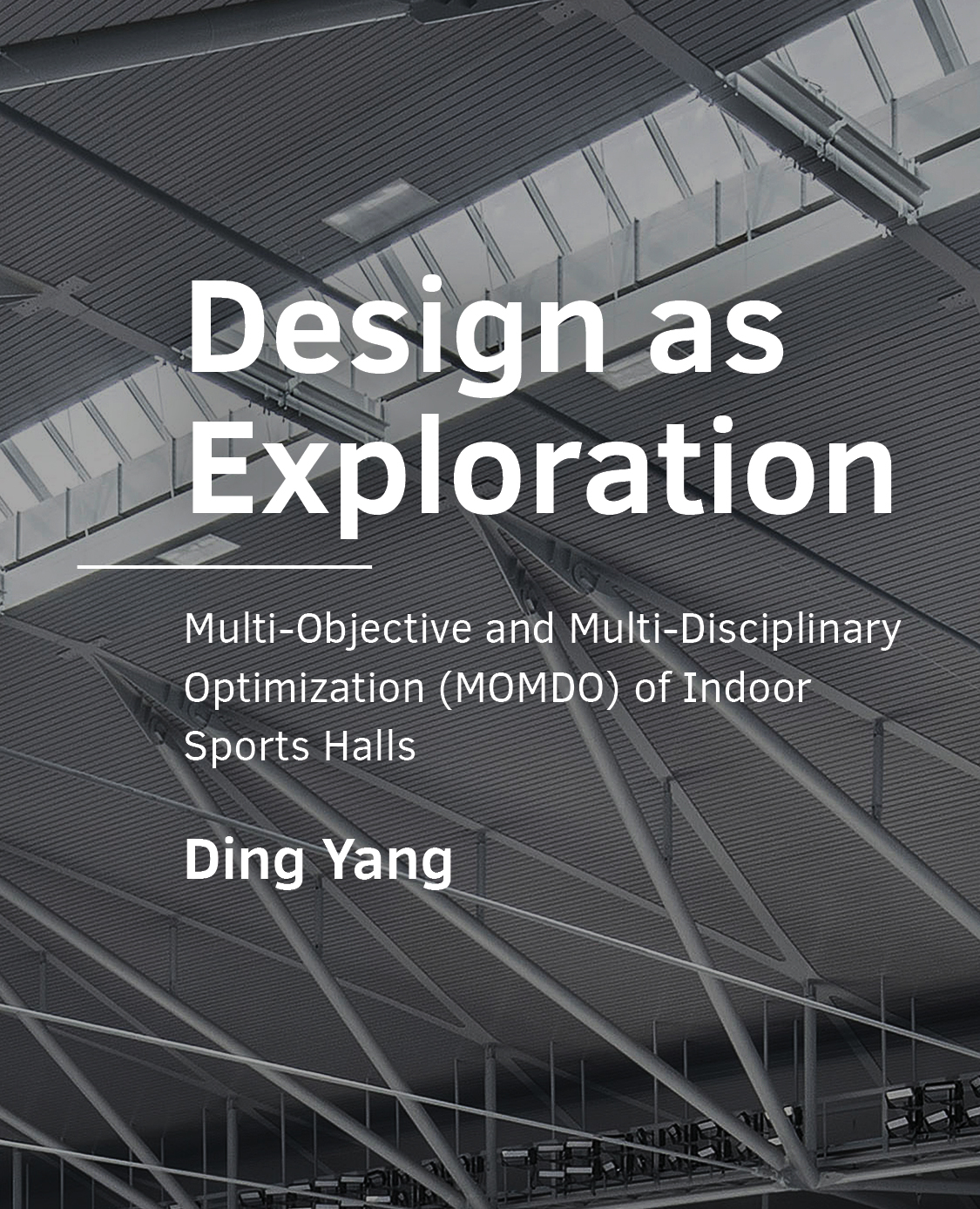
Design as Exploration. Multi-Objective and Multi- Disciplinary Optimization (MOMDO) of Indoor Sports Halls
Author: Ding Yang
Defended: 2022
Click to read more
Author: Ding Yang
Promoters: Prof. dr. Sevil Sariyildiz, Prof. dr. Yimin Sun, Dr. Michela Turrin
Keywords: Performance-Based Building Design, Optimal-Design Paradigm, Design as Exploration, Optimization Problem Re-Formulation, Multi-Objective Optimization, Multi-Disciplinary Optimization, Indoor Sports HallsTOC
There are an increasing number of optimal-design paradigms used in architectural design nowadays. In these paradigms, a design task is formulated, or partially formulated, as an optimization problem. Multi-Disciplinary Optimization and Multi-Objective Optimization, as two important optimal-design paradigms, have shown their great potential in improving the performances of complex buildings in recent decades. Nevertheless, current paradigms for ill?defined conceptual architectural design still lack ways to ensure the achievement of a reliable optimization problem, which hinders reliable design solutions despite the use of advanced optimization algorithms. To address this problem, it is necessary to shift the focus from Optimization Problem Solving to Optimization Problem Formulation. This research particularly focuses on knowledge?supported, dynamic and interactive Optimization Problem Re-Formulation in order to construct a new Multi?Objective and Multi-Disciplinary Optimization (MOMDO) method suitable for use in ill?defined conceptual architectural design. The proposed method consists of two subtype methods: Non?dynamic, Interactive Re-formulation method (Subtype-I) and Dynamic, Interactive Re?formulation method (Subtype-II), which can be used to explore design space in a convergent and divergent manner respectively. To support the re-formulation, various kinds of information and knowledge need to be extracted by utilizing different computational techniques, such as advanced sampling algorithms, Self-Organizing Map, Hierarchical Clustering, Smoothing Spline Analysis of Variance, Two-Level Variable Structure and modular programming. Moreover, a software workflow that can provide these computational techniques is developed; it integrates McNeel’s Grasshopper, ESTECO's modeFRONTIER and simulation software tools Daysim, EnergyPlus and Karamba3D. With the support of this software workflow, the proposed method is demonstrated via two case studies concerning the conceptual design of indoor sports halls.
Architectural Design Performance Through Computational Intelligence. A Comprehensive Decision Support Framework
Author: Ioannis Chatzikonstantinou
Defended: 2021
Click to read more
Author: Ioannis Chatzikonstantinou
Promoters: Prof. dr. Sevil , Dr. Michela Turrinriyildiz
Keywords: Neural Networks, Decision Support, Complexity, Computational Intelligence, Architectural Design, Evolutionary Computation
Architectural design is a prime example of a complex task. The associated complexity often poses significant challenges to human cognition. As such, a systematic approach to design space exploration must be undertaken to maximize the potential for discovering optimal solutions to design problems. Recognizing the impact design complexity has on architectural design, this thesis proposes a comprehensive computational intelligence decision support system that combines components based on intelligence with ones based on cognition, with the ultimate aim of enabling decision-makers manage design complexity and improve decision making. This thesis adopts the theoretical standpoint that efficient navigation of an unknown environment assumes a fusion of intelligence and cognition. In this sense, and given the already widespread adoption of intelligent approaches (such as Evolutionary Computation), the main contribution of this thesis is to endow the intelligent approach with cognitive facilities, so as to improve its effciency to the point that it is readily applicable to the early stages of the architectural design process. Fusion of intelligent with cognitive approaches, as outlined herein, oIers the unique advantage of a decision support approach that is both powerful, owing to the extensive search capabilities of intelligent search algorithms, and flexible, owing to the extensive knowledge modeling capabilities of cognitive approaches. As such, it is uniquely suited to the early conceptual design stage where the need to explore large design spaces, flexibly redefine the design problem, and satisfy preferences that are not included in the primary design goals, are all paramount.The main output of this thesis is a comprehensive decision support framework; it is a framework, in the sense that it comprises a set of methods and implemented tools that seek to augment decision making in architectural design; it is termed comprehensive in that it employs computational cognition and machine learning to augment the intelligent decision support capabilities throughout the design decision support process. It is also generic and applicable as-is to a wide spectrum of architectural design problems. In the context of this thesis, validation of the proposed approach is performed mainly in case studies relevant to facade design, recognizing this design topic as a complexity-exhibiting exemplar in architectural design practice.
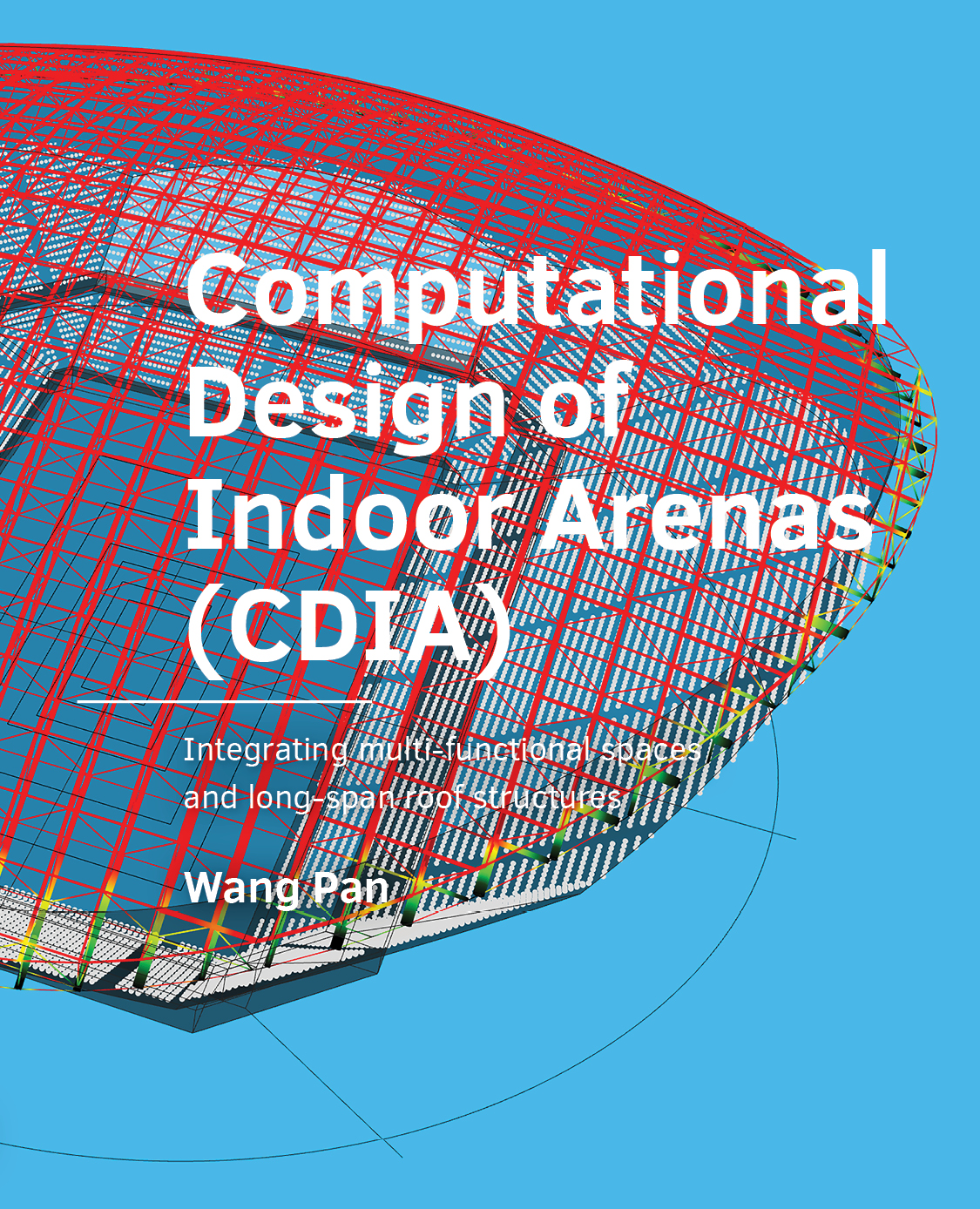
Computational Design of Indoor Arenas (CDIA). Integrating multi-functional spaces and long-span roof structures
Author: Pan Wang
Defended: 2021
Click to read more
Author: Pan Wang
Promoters: Prof.dr.ir. I.S. Sariyildiz, Prof.dr.ir. Y. Sun, Dr. M. Turrin
Keywords: Indoor arena, computational design, multi-functional space, long-span roof structure
Indoor arenas are important public buildings catering for various activities (e.g., sports events, stage performances, assemblies, exhibitions, and daily sports for the public) and serving as landmarks in urban contexts. The multi-functional space and long-span roof structure of an indoor arena are highly interrelated, which impact the multi-functionality and structural performance and mainly define the overall form of the building. Therefore, it is crucial to integrate the multi-functional space and long-span roof structure to formulate proper forms for indoor arenas, in order to satisfy various design requirements during the conceptual design. This thesis aims at formulating a computational design method, ‘Computational Design of Indoor Arena (CDIA)’, to support the conceptual design of indoor arenas by using the computational techniques of parametric modelling, Building Performance Simulations (BPSs), Multi-Objective Optimizations (MOOs), surrogate models based on Multi-Layer Perceptron Neural Network (MLPNN), and clustering based on Self-Organizing Map (SOM clustering). In the formulation of CDIA, these techniques are modified, improved and organized into five components and three workflows, to satisfy the demands of the conceptual design of indoor arenas.
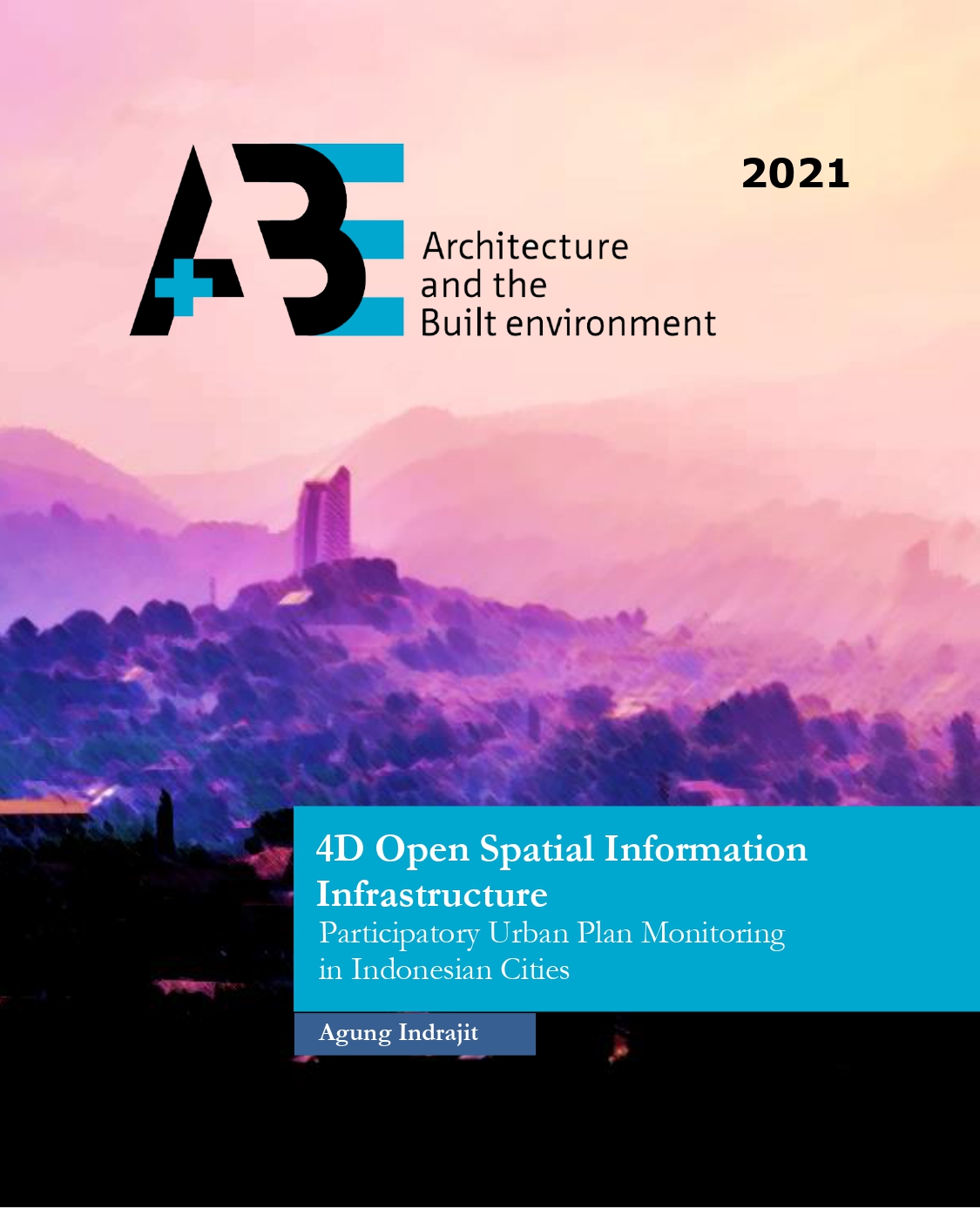
4d open spatial information infrastructure: Participatory urban plan monitoring in indonesian cities
Author: Agung Indrajit
Defended: 2021
Click to read more
Author: Agung Indrajit
Promoters: Prof.dr.ir. P.J.M. van Oosterom, Dr.ir. B. van Loenen
Keywords: open spatial information infrastructure, urban plan, participatory monitoring, information interoperability, multidimensional representation
An urban plan contains a set of agreements from all stakeholders that may directly impact livelihood. However, many cities show a ‘plan and forget’ behavior by not monitoring and evaluating their urban plans. While local citizens are often excluded after the urban plan is enacted. Gibbs (2016) warned of the risk of this behavior by saying, “local communities are given the impression that the risk is being managed, when in fact it is not.” Therefore, as the affected party, local citizens should be included in the development of the plan and the monitoring, evaluating, and reporting of urban plan implementation. However, in reality, a collaboration between authorities and local citizens in monitoring land development is rare. In some cases, cities do not share urban plans with society. This situation motivates this research by developing a framework to make urban plans interoperable and accessible to the broader community by determining four particular objectives: (i) to identify what type and specification of spatial data are required to support participatory monitoring of the implementation of the urban plan; (ii) to design information interoperability of land-use plans for participatory urban plan monitoring; (iii) to construct spatial data governance that allows two-way information flows between stakeholders in participatory urban plan monitoring; and (iv) to develop a prototype for PUPM that enables two-way information flows and multidimensional spatial representation to support participatory urban plan monitoring. This study was built upon the four functions of land management: land tenure, land valuation, land-use planning, and land development. Information interoperability is essential for allowing interaction between these functions, particularly in PUPM. This study supports the revision of the ISO 19152 on the Land Administration Domain Model (LADM) by developing Spatial Plan Information Package (SP Information Package) for accommodating information from land-use planning and land development planning. In recent years, cities have adopted the digital twin concept to represent physical urban objects by exploiting 3D spatial information for improving the spatial thinking of all stakeholders. A common interest of urban planners in using an updated 3D spatial information for Rights, Restrictions, and Responsibilities (RRRs) was depicted for further analysis. Therefore, this study proposes the digital triplets concept for representing the legal situation of the land in four-dimensional representation (3D geometry with temporal aspect managed as an attribute). This thesis presents the development of a prototype using 4D spatial representation for supporting PUPM. The prototype enables two-way information flows between urban planners and citizens to enable the co-production of urban information. This study also proposes user-centered and data governance aspects in a holistic approach to implementing the proposed standard and technology, particularly for sharing RRRs with all stakeholders through an Open Spatial Information Infrastructure. The result of this study is implemented with actual urban plan data in the two biggest Indonesian cities: Jakarta and Bandung City. A usability test was conducted to assess the implementation of participatory urban plan monitoring using RRRs. The result shows that our approach can accommodate RRRs from the spatial planning process, providing a complete overview of the legal situation of the land or urban space to all stakeholders to monitor the implementation of urban plans to support the Sustainable Development Goals: ‘plan and progress’.
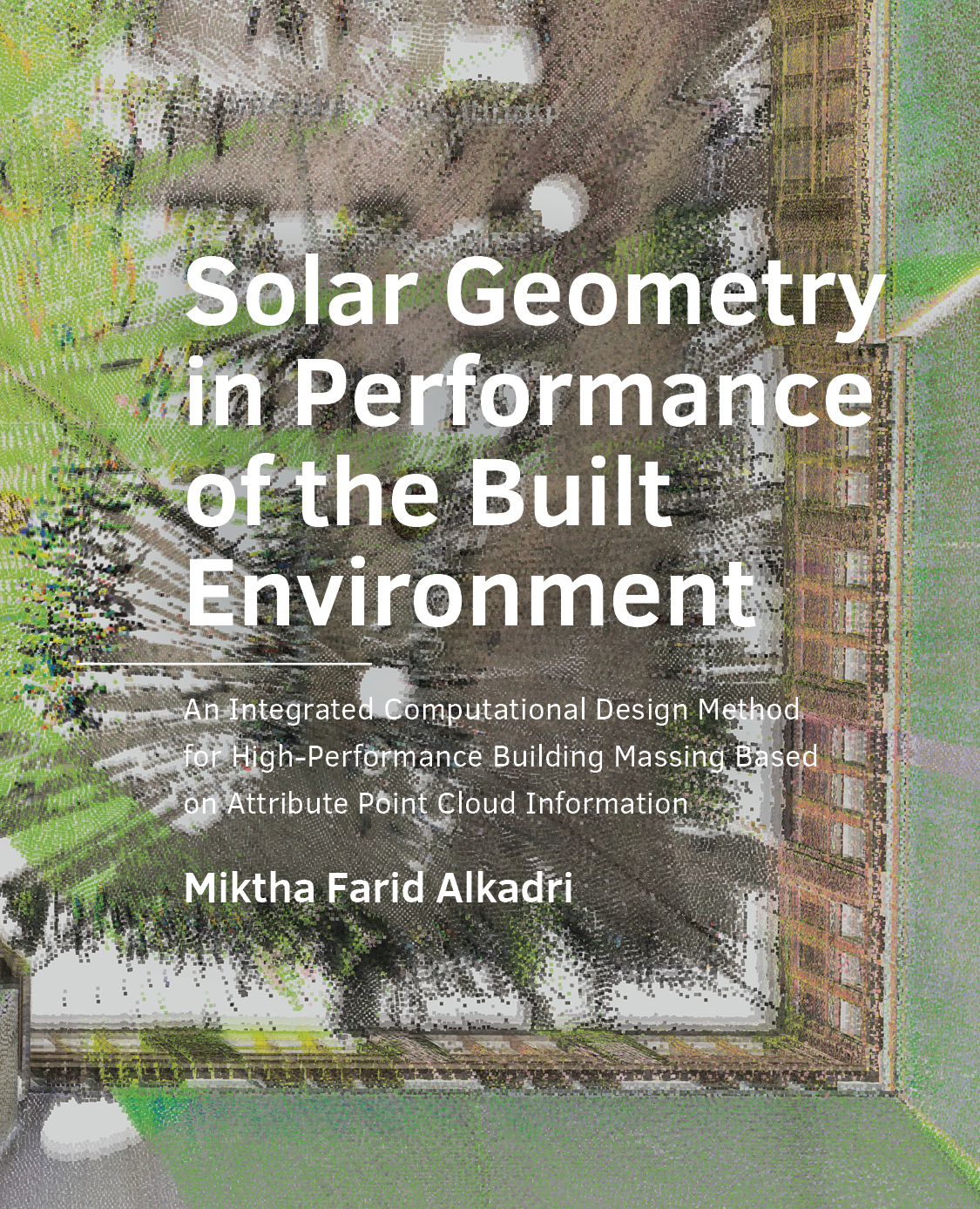
Solar Geometry in Performance of the Built Environment: An Integrated Computational Design Method for High- Performance Building Massing Based on Attribute Point Cloud Information
Author: Miktha Farid Alkadri
Defended: 2021
Click to read more
Author: Miktha Farid Alkadri
Promoters: Prof. dr. ir. arch. I.S. Sariyildiz, Dr. M. Turrin
Keywords: site analysis, point cloud data, attribute information, material properties, solar radiationTOC
As part of the passive design strategy, the development of computational solar envelopes plays a major role to construct a cooperative environmental performance exchange between new buildings and their local contexts. However, the state-of-the-art computational solar envelopes pose a great challenge in understanding site characteristics from a given context. Existing methods predominantly construct 3D context models based on basic architectural geometric shapes, which are often isolated from the surrounding properties of local contexts (i.e., vegetation, materials). Thus, they only focus on context-oriented buildings and energy quantities that unfortunately lack a contextual solar performance analysis. It is clear that this condition may result in a fragmented understanding of the local context during the design and simulation process. With the potential application of attribute point cloud information, it is necessary to consider relevant parameters such as surface and material properties of existing contexts during the simulation of solar geometries, which are currently absent in computational frameworks. As such, the new method is required to enable architects not only to measure specific performances of the local context but also to identify vulnerable areas that may affect the proposed design. This research focuses on exploring an integrated computational design method for solar geometry based on solar and shading envelopes, and geometric and radiometric information from point cloud data. In particular, two computational models consisting of SOLEN (Subtractive Solar Envelopes) and SHADEN (Subtractive Shading Envelopes) are developed, which are applied to temperate and tropical climates, respectively. In design practice, these models help architects to produce informed-design decisions towards high-performed building massing.
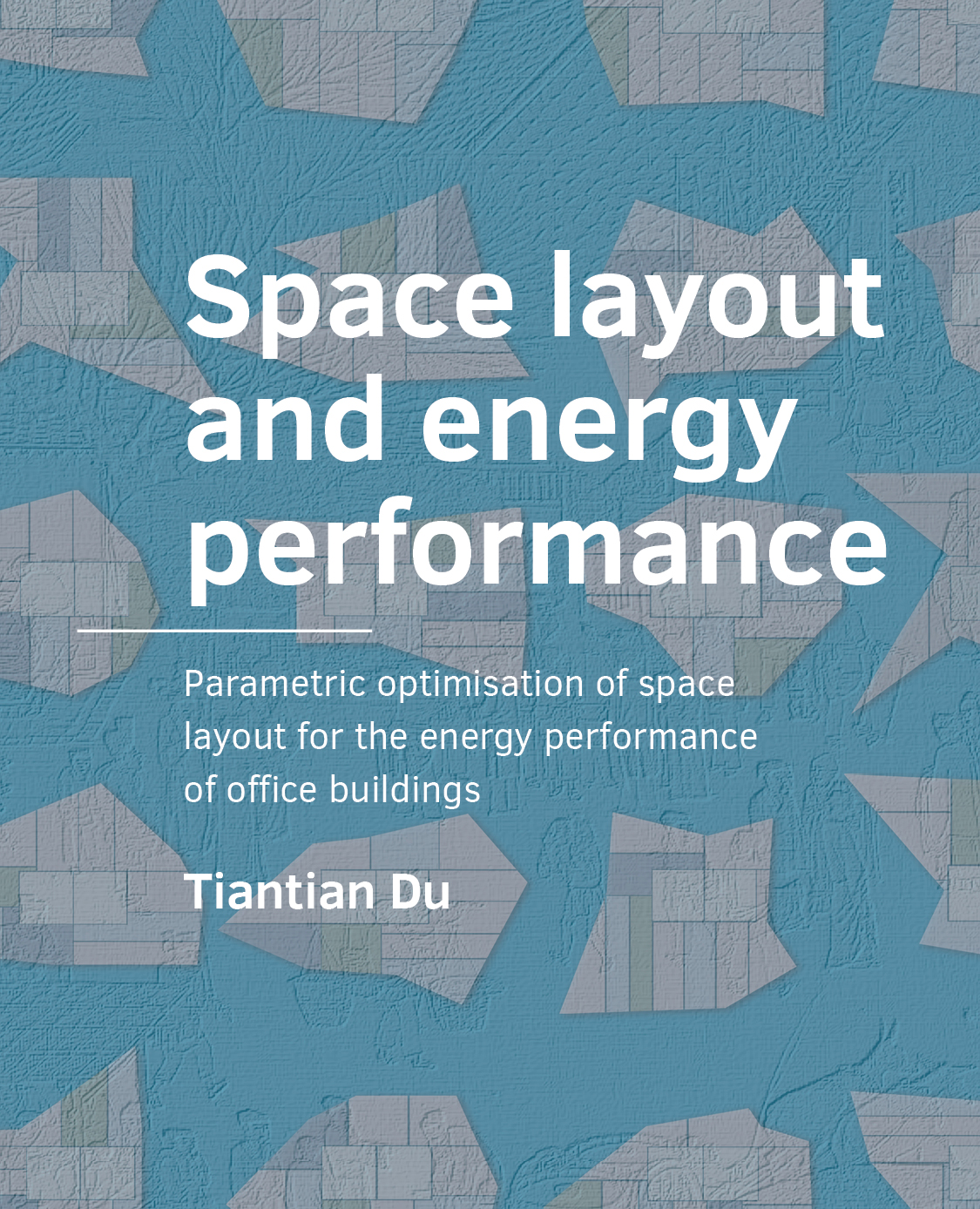
Space layout and energy performance: Parametric optimisation of space layout for the energy performance of office buildings
Author: Tiantian Du
Defended: 2021
Click to read more
Author: Tiantian Du
Promoters: Prof.dr.ir. A.A.J.F. van den Dobbelsteen, Dr.ir. S.C. Jansen, Dr. M. Turrin
Keywords: Space Layout Optimization, Building Energy Performance, Parametric Design, Computational Optimization, Energy Simulation, Automatic Layout Generation, Lighting Energy Demand, Office Building Design
Studies have shown that space layout design can impact the building energy performance (BEP). However, its isolated effect on the BEP has not been identified yet. Performative computational architecture has proven to be effective to improve the BEP. However, only a few studies have tried to apply the performative computational architecture to space layout design. This research aims to investigate how space layout affects BEP, and to develop a computational optimisation method for space layout to improve the BEP of office buildings. Firstly, the mechanism on how space layout affects the BEP and how much energy is affected by space layout were identified through literature review and simulation. 11 layouts with different function allocations were simulated and compared. The outcome showed that layout variance affected lighting the most, and the maximum difference happened in Harbin, being 46% without shading and 35% with shading. As a follow-up, another literature review was conducted, which identified the functional requirements of space layout design, methods for automatic generation of space layout, and requirements for energy performance optimisation. In addition, a computational method was developed to optimise space layout design for energy performance improvement, regardless of functional requirements. As a result, the relationship between space layout and energy demands were recognised. In conclusion, space layout has proven to be a significant influence on the BEP, and conscientious design can improve it. For optimal energy performance, manual design of space layout is not feasible; in order to do that, a computational approach is needed.
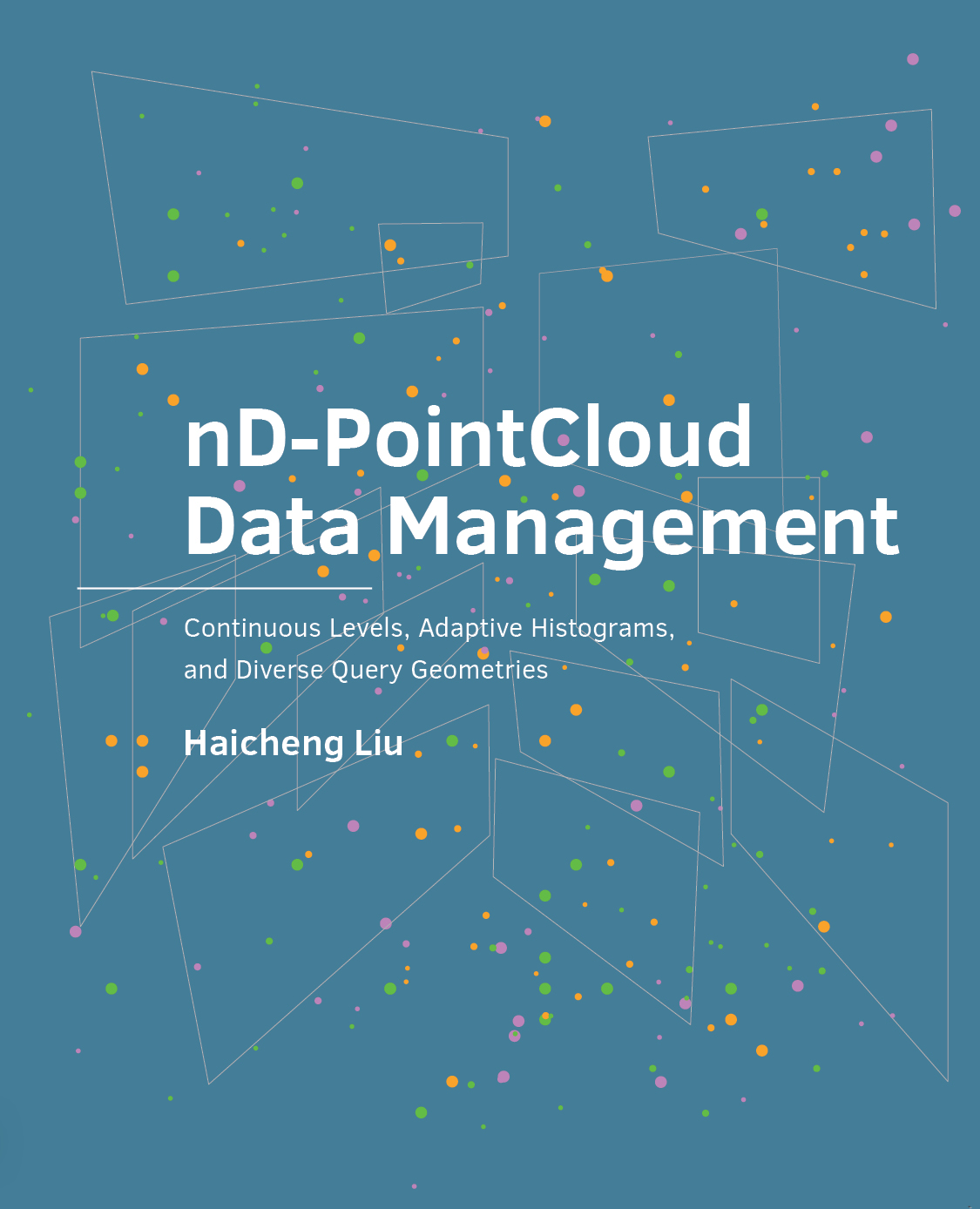
nD-PointCloud Data Management: Continuous Levels, Adaptive Histograms, and Diverse Query Geometries
Author: Haicheng Liu
Defended: 2022
Click to read more
Author: Haicheng Liu
Promoters: Prof. dr. ir. P.J.M. van Oosterom, Dr. ir. B.M.Meijers
Keywords: nD point clouds, space filling curves, continuous level of importance, histograms, skewed distributions, point set coverage, convex polytope query, flood risk mapping, AHN, benchmarks
In the Geomatics domain, a point cloud refers to a data set that records the coordinates and other attributes of a huge number of points. Conceptually, each of the attributes can be regarded as a dimension to represent a specific type of information, such as time and Level of Importance (LoI). Drastically increasing collection of high dimensional point clouds raises essential demand for smart and highly efficient data management solutions. However, effective tools are missing. File-based solutions require substantial development of data structures and algorithms. Also, with such solutions, enormous effort has to be made to integrate different data types, formats and libraries. By contrast, state-of-the-art DataBase Management Systems (DBMSs) avoid these issues, because they are initially devised for generic use of data. However, DBMSs still present limitations on efficiently indexing non-uniformly distributed points, supporting continuous LoI, and operating high dimensional data. These problems motivate the PhD research which focuses on developing a new DBMS solution. It is aimed at efficiently managing and querying massive nD point clouds to support different types of applications.
No. 07 (2022): Improving the performance of hospitals: An architectural analysis of patient journeys in Chine
Author: Dejian Peng
Defended: 2022
Click to read more
Author: Dejian Peng
Promoters: Prof.dr. C. Wagenaar, Prof.ir. P.G. LuscuereProf.dr. C. Zhang
Keywords: patient journey, process, patients’ satisfaction, performance
Nowadays, we are faced with serious challenges in public health worldwide. However, the challenges cannot be solved only in the domain of architecture, medical science or management. A successful hospital building is more than a nice building or an efficient healing machine. Patient journey is such a concept that tries to explore the possibility to solve the problems in hospitals in the domain of hospital architecture and hospital management. In this context, the research proposes a study of patient journey in hospitals from the perspective of architecture on basis of the outcomes achieved in management. Patient journeys are transferred from both clinical and administrative processes to special patterns. Moreover, in such a visual way, both the efficiency and effectiveness of hospitals and patients’ satisfaction during the journeys in hospitals are analyzed with case studies of China and the Netherlands. The system of spatialized patient journeys helps architects and hospital managers broaden their understanding of hospital. And the comparison results from case studies are useful for hospitals in China to improve performance and patients’ satisfaction.

Towards the Integration of Additive Manufacturing for Freeform Steel and Glass Façade Construction
Author: Lia Marie Tramontini
Defended: 2024
Click to read more
Author: Lia Marie Tramontini
Promoters: Prof. Dr.-Ing. U. Knaack, Dr. M. Turrin, Prof. Dr.-Ing T. Klein
Keywords: Freeform architecture, Façades, Additive manufacturing, Masscustomized fabrication
The thesis, titled ‘Towards the Integration of Additive Manufacturing for Freeform Steel and Glass Façade Construction,’ explores the transformative role of additive manufacturing (AM) in enhancing the design and construction of Freeform Steel and Glass Façades (FFSGF). These façades involve intricate components, necessitating collaborative efforts among designers, engineers, and fabricators to achieve complex façade geometries with good performance while ensuring efficiency in design, material usage, fabrication, and cost. Recent advancements in AM technology have made it a potentially viable and increasingly accessible fabrication strategy, particularly for mass-customized components such as those used in freeform construction. The research aims to answer the central question of how AM can effectively contribute to developing node solutions supporting Freeform Steel & Glass Façade (FFSGF) construction.The study systematically examines opportunities for improvement in existing solutions. Chapters 2 and 3 provide a critical overview of FFSGF construction typologies and explore the current landscape of AM in façade applications. Chapters 4 and 5 delve into the design and development of crucial components—structural nodes and gasket nodes—utilizing different AM technologies. Prototypes are manufactured and evaluated in comparison to existing solutions. Chapter 6 provides a case study of integrating AM product development into a larger construction project, emphasizing interdisciplinary collaboration. The thesis underlines the advantages of the systemization of AM node design throughout the design and fabrication of AM nodes. This research contributes to the evolving knowledge at the intersection of design, engineering, construction, and AM, aiming to provide a valuable resource for building industry professionals navigating the complexities of incorporating AM into the fabrication of freeform steel and glass façades.
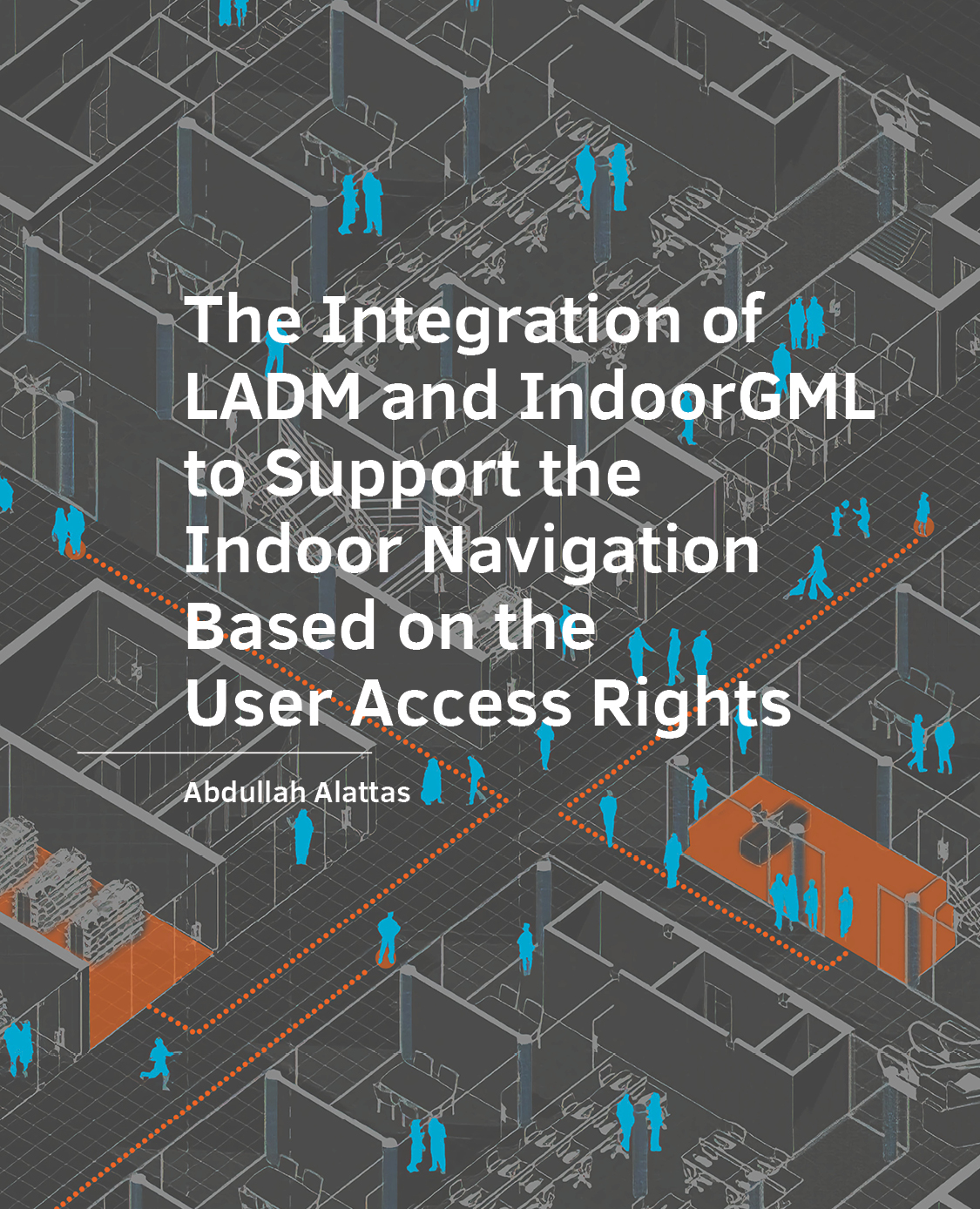
The Integration of LADM and IndoorGML to Support the Indoor Navigation Based on the User Access Rights
Author: Abdullah Alattas
Defended: 2022
Click to read more
Author: Abdullah Alattas
Promoters: Prof.dr.ir. P.J.M. van Oosterom, Prof.dr.techn. S. Zlatanova
Keywords: LADM, IndoorGML, indoor navigation, access rights, database
Indoor navigation applications are actively investigated and developed due to their capacity to provide users with essential information in the modern extensive building complexes. Therefore, many researchers have developed a range of indoor navigation applications, which have focused on aspects such as localization, indoor route computation, and human spatial cognition. Unfortunately, current indoor navigation systems do not consider the user's access rights when it comes to navigating safely and effectively. This thesis delivers several contributions, which are based on international standards, to provide Indoor navigation aware of the user’s access rights. The thesis proposes: 1) a combined model of ISO’s LADM and OGC’s IndoorGML; 2) an enhancement of the UML class diagram of the conceptual model of IndoorGML; 3) a 2D LADM country profile of the Saudi Arabia; 4) a 3D LADM country profile of Saudi Arabia; 5) a conversion of the combined LADM and IndoorGML conceptual model to a technical model; 6) definitions of access rights for users of indoor environments during crisis based on the integrated model of LADM and IndoorGML; 7) a 3D web-based prototype application for indoor navigation making use of user access rights. The developed concepts and implementation have been acknowledged by the standardization organization ISO and OGC and considered for amending IndoorGML and LADM.
Click to read more
Click to read more
Click to read more
Click to read more
Click to read more
Click to read more
Click to read more
Click to read more
Click to read more
Click to read more
Click to read more
Click to read more
Click to read more
Click to read more
Click to read more
Click to read more
Click to read more
Click to read more