

Bachelor Architecture, Urbanism and Building Sciences
Form and Representation
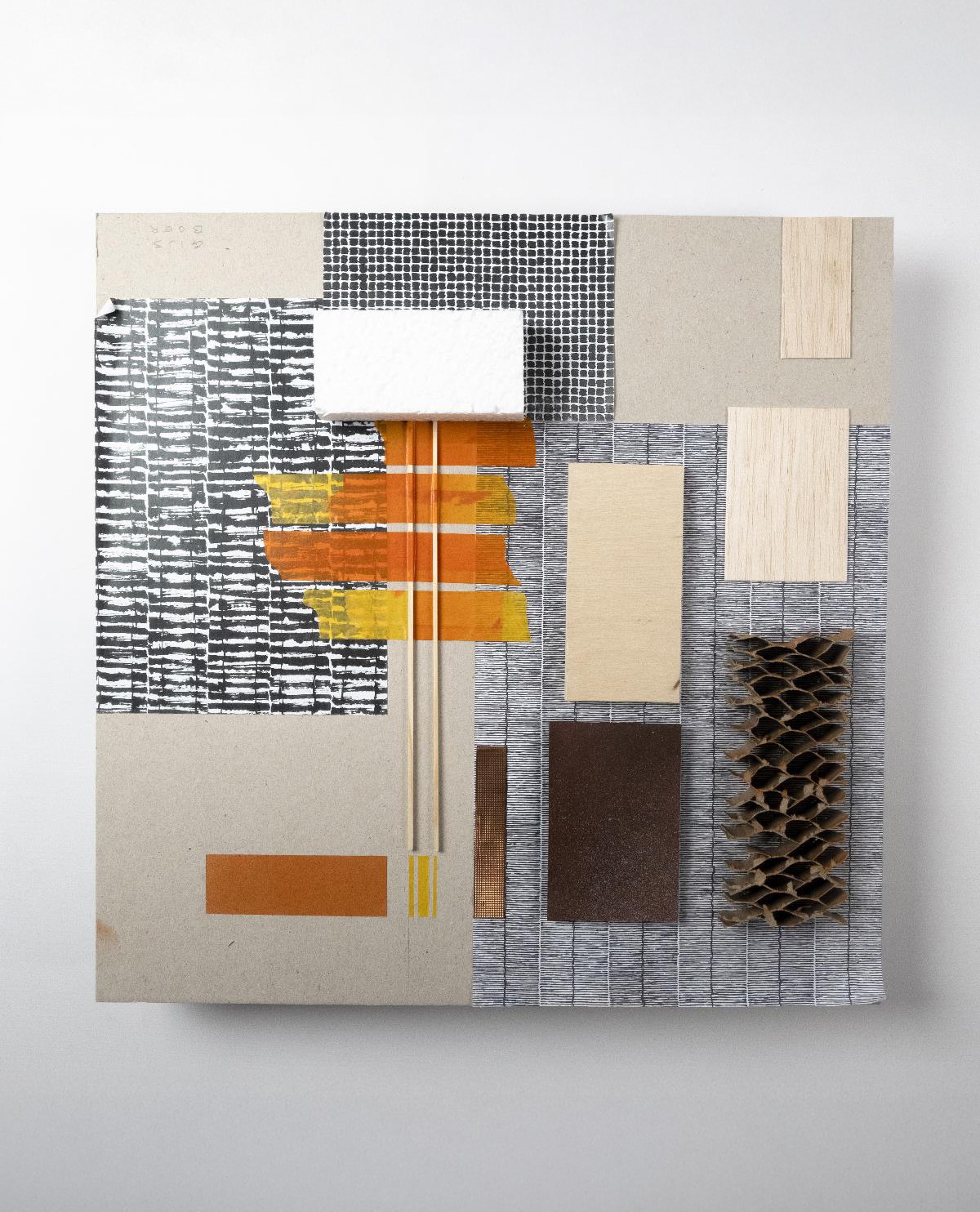
In W2, Form and Representation, the research process is further advanced within the context of design. Through a cohesive set of design exercises and techniques in drawing and modeling, students learn to abstract, document, visualize, and present their ideas.
View course details →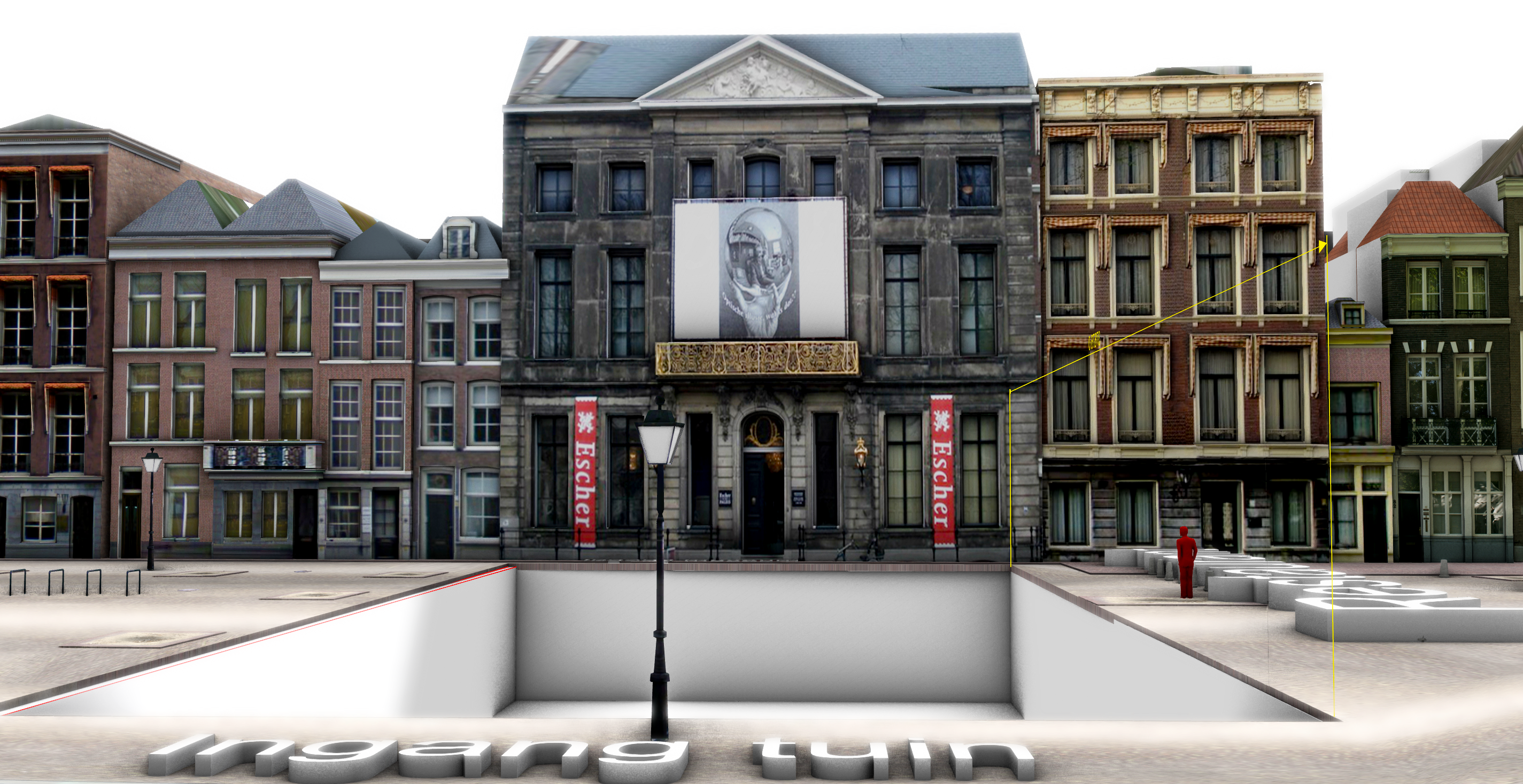
Digital Design Environment
The WV3 'Digital Design Environment' module uses the powerful capabilities of modelling, simulation and analysis techniques and methods in the computer, which can take architectural digital design to the next level.
View course details →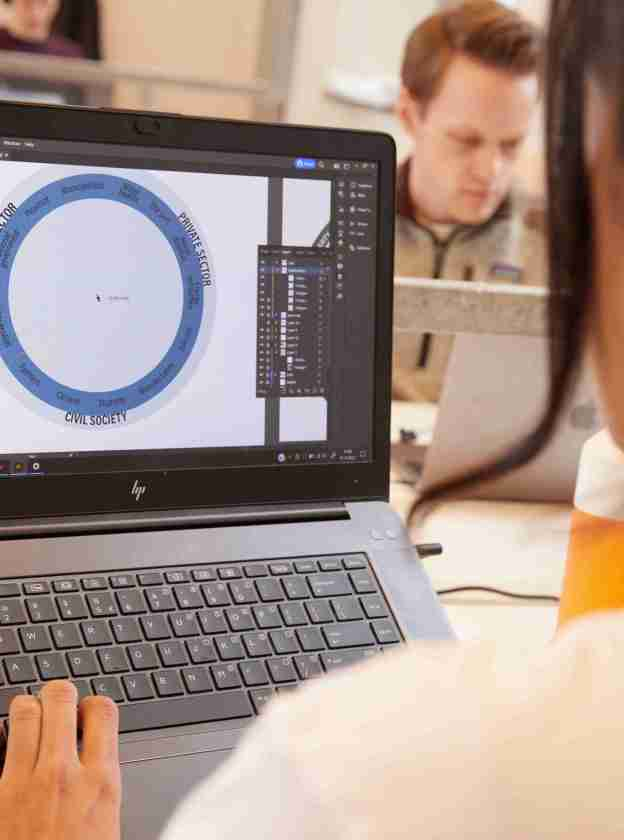
Architecture as Science
In the module WV4 'Architecture as a science', the emphasis is on research questions, research methods and reflection, resulting in the writing of a scientific text, the content of which matches the faculty themes.
View course details →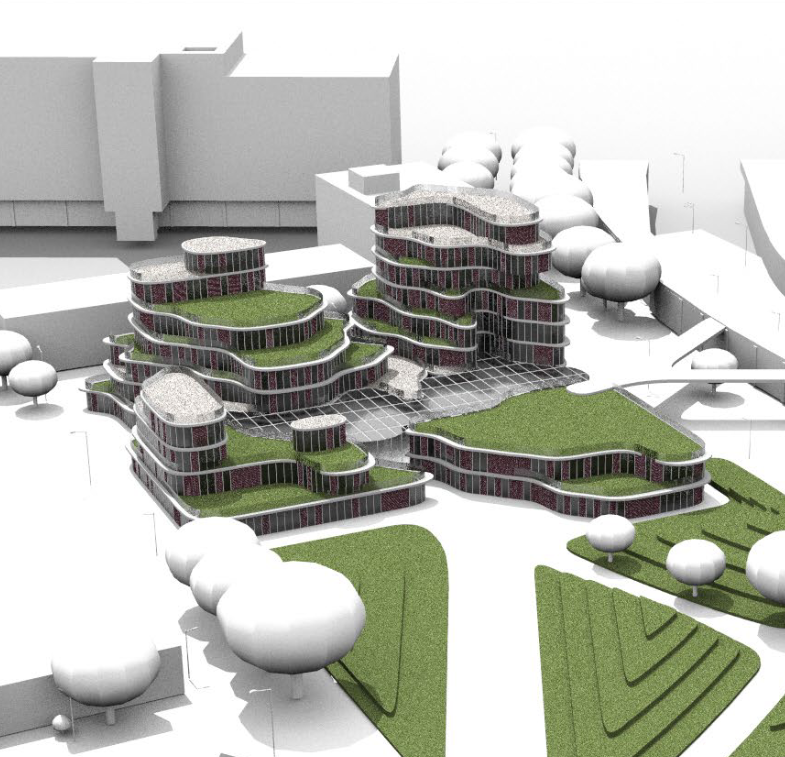
Computational Design Studio
The objective of the course is to design a multi-functional building complex, based on preconditions and environmental data, by utilizing computational tools, methods, and techniques in a workflow.
View course details →
Spatial Decision Support Systems
The course provides a basis for spatial analysis in a large area. Students learn how to model and visualize the mutual impact of the environment and their design. Students will solve complex spatial decision problems at a geographic scale, for which they apply various simulation and optimization approaches, among other things.
View course details →Masters Geomatics & GIMA
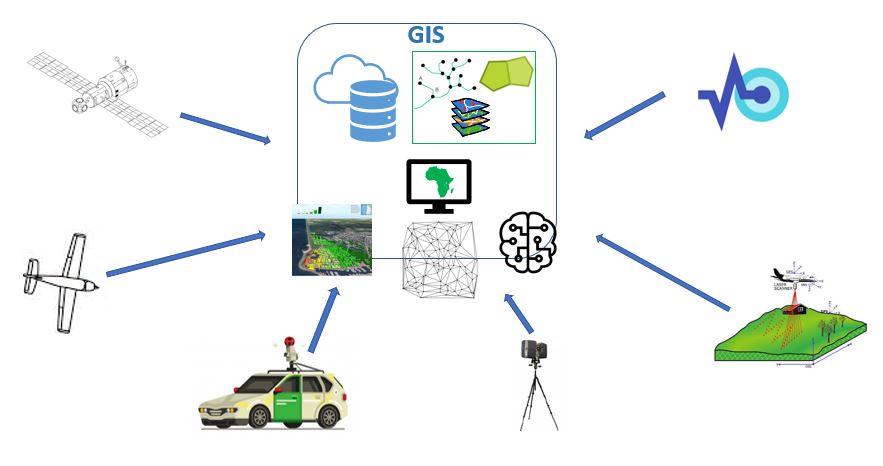
Sensing Technologies
This course provides an overview on the principles and applications of spaceborne, airborne and terrestrial sensing technologies for geographic data acquisition as well as techniques for processing and information extraction from the acquired data.
View course details →
Python Programming for Geomatics
This course gives an introduction to the Python programming language and focuses on applications for Geomatics in its assignments. Introduction to programming with (mainly) Python and (some) C++.
View course details →
Geo Database Management Systems
This course is about managing geo-information in a database management system (DBMS). The geo-DBMS is the central component of the geo-information chain.
View course details →Positioning and Location Awareness
This course explores Global Navigation Satellite Systems (GNSS) and indoor positioning technologies for tracking people, devices, and assets in urban and indoor environments, with a focus on location-aware applications. It combines theoretical methodologies, such as coordinate reference systems, with practical implementation strategies for developing robust, context-aware applications.
View course details →Geoweb Technology
The Geoweb technology course gives a thorough overview of using geo-information on the web and related standards. It includes using, creating and assessing different geo-web services and user interfaces for disseminating vector, raster, sensor, point cloud, and 3D geo-data.
View course details →Synthesis Project
The project aims at investigating a real-world geo-information problem. Geomatics teachers in cooperation with a company, governmental agency, or a TU Delft research group that is not involved in the Geomatics program the clients define the problem.
View course details →Master Architecture, Urbanism and Building Sciences

Introduction to Computational Design
This course aims to introduce the uses of computational design methods within an integrated workflow. It is a hands-on design course in which the students develop skills by working on a design assignment.
View course details →
Technoledge Design Informatics
This course aims to introduce digital and robotic fabrication technologies in an integrated computational design to production workflow. It is a hands-on design and build course.
View course details →
Computational Intelligence for Integrated Design
Computational Intelligence encompasses theory and application of computational methods, techniques and tools that have the ability to learn based on given datasets, models and tasks. It includes AI comprising machine learning, bringing together concepts from probability and statistics to programming and optimisation.
View course details →
MEGA
MEGA is a collaborative integral multi-disciplinary design of a special big and/or tall building. This could be a multifunctional skyscraper or a multifunctional building with a large span, such as a stadium, a sports facility, a museum, or transport hub.
View course details →
Online Digital Portfolio
The student is taught to design and construct a presentation portfolio. This portfolio is presented on-line by means of a web browser. The portfolio contains a relevant summary of both the education parts followed by the student during the Bachelor and Master 1 and any extra-curricular activities.
View course details →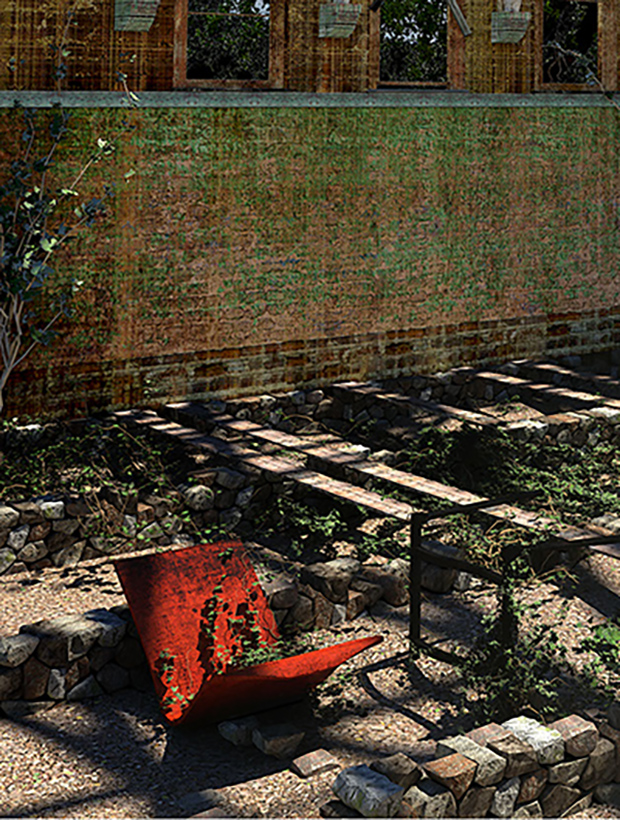
Beyond 3D Computer Visualisation
The students create within 10 weeks a visualization of a quote derived from a book, speech or song. The visualization can be a single high resolution poster or a VR environment. They use advanced software like Maya, Mudbox, Substance Painter and the Unreal game engine in combination with the HTC Vive for the VR.
View course details →Creative Robotics
This is an interfaculty course that explores robotics technologies within the creative industries, particularly those closely relevant to spatial design. It aims to enhance students’ understanding of robotics through applied, critical, and speculative approaches focusing on the relationships between robots, humans, and environments.
View course details →Graduation Projects
We supervise students in various Master tracks at the BK Faculty. The interdisciplinary projects range in their focus and some include the application of AI in architecture, engineering, and GIS, data structure and management for the built environment, and additive manufacturing, and material studies.
View course details →
Developing a Methodology for Human-AI Collaboration in Early Architectural Design: A Prototype for Generating Data Driven 3D Volumetric Models using Natural Language Input
Neuro-adaptive Architecture in Extreme Environments
Real-Time Evaluation Of The Life-Cycle Performance and Material Usage Of Modular Design
Dementia-inclusive Design. Machine Learning Assessment Tool for evaluating indoor wayfinding quality in dementia care spaces
ReinforceRay. Optimal Long-Term Planning of Photovoltaic and Battery Storage Systems in Grid-Connected Residential Sector with Reinforcement Learning
Computational optimization of hempcrete integration: improving energy performance and minimizing embodied energy in a variety of building types and climates
3D Generative Adversarial Networks to Autonomously Generate Building Geometry
ClimAIte Control: Improving Building Operation Through AI
Integrating an additive manufacturing remake strategy into a computational design process
Integrated bio-inspired Design by AI: Using cell structure patterns to train an AI model to explore topology design ideas
Machine learning-based assessment tool for predicting daylight and visual comfort
Humble Giants: Computational Intelligence for Designing More Sustainable High-rise Buildings using Surrogate Models
Computational Design Analysis of Height Scenarios in Residential High-rise under BENG 2020
Energy Space Layout: Designing space layout with optimised energy performance
Computational method for football stadium renovation: A computational method for the renovation of football stadiums to facilitate designers into making decisions
Simulation of adaptive user behavior with respect to noises in offices
FACA-DE-LIT: Facade optimisation for visual comfort by controlled daylight distribution in high rise office buildings
Optimization for retrofitting educational buildings in Greece
Computational optimization for the facade design of a nearly zero-energy high-rise office building in the temperate climate
Optimisation of complex geometry buildings based on wind load analysis
Computation design method for Statics-Responsive Grid Shells
Sun shading of the future
Computational design method based in multidisciplinary design optimization and optioneering techniques for energy efficiency and cost effectiveness
Structural Design Exploration of High-rise Design Concepts Using Genetic Algorithms
Visual analytics for generative design systems
Inflate in case of emergency
Shading design workflow for architectural designers
Integrating Natural Ventilation within an optimization process of energy performance
Designing a resonant panel based on Helmholtz resonators with reduced geometrical complexity
Patterned Grid-shell: Designing a method to analyze and compare grid-shells influenced by traditional lattice patterns of north Asia
Decision Support System for circular integrated floor-system design in office buildings in The Netherlands
Hybrid wood construction encoded in a digital tool
Bricks as spatial sound modulators. Towards tuning the geometry
Geometry matching by multi-agent systems: Changing GFRP from an environmental hazard to a façade design solution
Grated structures for large span roofs: optimized canopy for De Kuip
Parametrically designed façade integrating phase change materials
Rapid Design Feedback by Parametric tools for Engineering Processes
Schiphol Interchange Station - Integrated design research for the wind and daylight performance of the building envelope
Developing a cellulose-based construction material through the controlled polymerisation of lignin
Cellulose & Lignin in Additive Manufacturing: Potential and challenges in the fabrication of structural nodes for free-form building envelope structures
Unconventional permeable microstructures: An engineered porous material: Designing the microstructure of a dynamic insulation component using additive manufacturing and evaluating its effect on airflow rate and pattern
The AM envelope: A mono-material facade element with complex geometries for structural and thermal performance by AM
3F3D: Topology Optimization for Freeform Building Envelope Design with Additive Manufacturing
Thin low frequency sound absorbing panel by additive manufacturing
Additive manufacturing by daylight: Towards a customized shading device
Acoustics by additive manufacturing
Digital Solutions for a Circular Facade Economy: A conceptual framework for a Facade's Product Passport to Facilitate decision making at its End of Service (EoS)
Optimised Concrete Facade
Tall Timber Extension: Design study for a new construction method
Reverse engineering in Architecture: Exploiting morphology of unprocessed material by reverse engineering in architecture
The Water Wall: a bio-inspired thermoregulative facade system
Zen Play: A fair play system connected to serious games to motivate energy sustainable behaviors inside dwellings
User experience as a method for reducing consumption in domestic buildings
Optimization of the structural grid tessellation for multi curved surface
Deep Generative Design
Retrofitting Planning Optimization
Beyond Noise. A Framework for a Design Tool Predicting and Optimizing Soundscape Design
Deep Generative Design: A Deep Learning Framework for Optimized Spatial Truss Structures with Stock Constraints
LT-Set: A Surrogate Model-Based Decision Tool for Low-Temperature District Heating Refurbishment
Deep Generative Designs: A Deep Learning Framework for Optimized Shell Structures
Multi-Objective optimisation in grid-shell design: Structural, Fabrication and Sustainability trade-offs in grid-shells at early-stage design
Building Design Approaches and Performance Under Predicted Climate Conditions
Towards a Sustainable Bridge Design: With the support of optimisation processes and decision making systems
Optimising the building management system in smart passive buildings
Design parameter guidelines for purely passive cooling buildings in Tropical regions
A new bridge in Rotterdam based on computational optimization
A change of state: A thermodynamic and cost-effective optimized Trombe wall based on latent heat storage (LHS) for year round application
Zero Energy Potential of a High Rise Office Building in a Mediterranean Climate